
Home > Blogs > Full Stack > Improving Web Accessibility: Implementing WCAG Compliance

March 27, 2025

To ensure inclusiveness in web platforms digital accessibility is essential. WCAG allows individuals with disabilities to navigate and interact efficiently with digital content. In this article we will explore the implementation of WCAG (Web Content Accessibility Guidelines) compliance for a healthcare client, we will discuss the challenges, approaches, and solutions used to create a more accessible web experience. The document highlights best practices in design, development, and testing to make sure compliance with WCAG 2.1 standards.
Most public-facing digital contents are inaccessible for people with disabilities like visual, auditory, physical, speech, cognitive, learning and language, WCAG guidelines provide an inclusive and compliant experience for those people with disabilities by enhancing navigation, accessible content and enhanced multimedia elements.
key Objectives
The WCAG (Web Content Accessibility Guidelines) are guidelines established by internationally recognized standards by Word Wide Consortium (W3) to make web and digital content more accessible for people with disabilities.
WCAG is based on four essential principles known as POUR:
- Perceivable – all users, regardless of their sensory abilities, can perceive all website interface components. This means they should be able to visualize, hear, or interact with the content.
- Operable – your visitors should be able to use the website’s features and functionality, even if they have physical disabilities or use different devices. For example, users should be able to navigate your website without a mouse.
- Understandable – you should implement the best web design practices, including prioritizing clear language and logical navigation to make your site more accessible.
- Robust – your website should be compatible with various technologies, including browsers, future user agents, and assistive technologies.
WCAG Version and Compliance Levels
There are three compliance levels that ensure that websites are inclusive for user with visual, auditory, motor, and cognitive impairments.
- A (Minimum Accessibility) – Essential fixes that all images should have text alternatives
- AA (Industry Standard) – Required for legal compliance in many region, that covers color contrast, keyboard navigation, etc.
- AAA (Enhance Accessibility) – This highest standard, that includes extra accessibility features like sign language interpretation.
Planning
To successfully implement WCAG, we followed a structured approach:
- We started with the accessibility audit using best available tools like WAVE, Axe, and Lighthouse.
- WAVE (https://wave.webaim.org/) is a suite of assessment tools that help content writers make their digital content more accessible to individuals with disabilities.
Steps to scan using WAVE AIM tool.
Step #1: Scan
- Goto https://wave.webaim.org/ – Enter webpage address you would like to scan for WCAG

Step #2: Report Summary
- Once you hit your web page address the tool will scan and show your WCAG Error Summary Report, it will help development team to identify the issue and address them.

Developer can check details under Errors, Contrast Errors, Alerts and Structure Element sections and this tool give you the guidelines how to fix the issue under Reference and many more.
- Identified WCAG compliance gaps and prioritized fixes based on severity.
- Established a phased implementation strategy to systematically enhance accessibility.
- Trained developers and designers on accessibility best practices.

Implementation Phases
We broke the implementation into the following phases:

Development Structure
To ensure sustainable accessibility, we have structured our solution as follows:
- Frontend: Used accessible UI libraries (Material-UI, Chakra UI) with WCAG-compliant components.
- Backend: Ensured proper API responses with accessible metadata.
- Testing Pipeline: Integrated automated accessibility testing in CI/CD workflows.
- Error: Image alternative text is not present
- Solution: Add an alt attribute to the image. The attribute value should accurately and succinctly present the content and function of the image.

- Error: This page contains one or more “empty” headings (heading tags with no text content)
- Solution: Add text — or remove the empty heading tags. Ensure that all headings contain informative content.
Using the aria-hidden attribute in heading element <h1> or <h2> or remove the empty headings section from the carousel.

- Error: A form control does not have a corresponding label
- Solution: If a text label for form control is visible, use the <label> element to associate it with its respective form control. If there is no visible label, either provide an associated label, add a descriptive title attribute to the form control, or reference the label(s) using aria-labelledby.
- Using the for attribute to provide in label element.

OR
Using the aria-label attribute to provide in input element.

Challenges and Resolutions
Despite following best practices, we encountered several challenges:
- Legacy Codebase: Older UI components lacked accessibility support.
- Dynamic Content: Managing real-time updates for assistive technologies like image alternatives text etc.
- Testing Variability: Different screen readers and browsers interpreted accessibility features inconsistently.
- Team Awareness: Developers and designers were unfamiliar with accessibility guidelines.
- Refactored legacy components with accessibility-friendly frameworks like React ARIA. when necessary to supplement or enhance the accessibility of non-standard or dynamic content.
- Used live regions (aria-live) to announce dynamic content updates.
- Conducted cross-platform testing with NVDA, JAWS, and Voiceover.
- Organized accessibility training workshops for the development team.
Key Takeaways
The successful automation of the custom POM and automated API testing led to several valuable insights:
- Accessibility should be integrated from the design phase, not as an afterthought.
- Using automated tools but manual testing with real users is crucial.
- WCAG compliance improves overall UX, helping all users, not just those with disabilities.
- Teamwork between designers, developers, and content creators is essential.
WCAG guidelines are essential for creating better and improved UX experience. Organizations can enhance usability, achieve compliance requirements and improve UX by implementing these guidelines. This article provides a comprehensive guide for creating accessible navigation, inclusive content and multimedia enhancements to adopt necessary accessibility compliance and inclusive digital content.
Contributor
Aamir Aleem
 Websites used to be something you built once and basically forgot about. That doesn’t work …Read More »
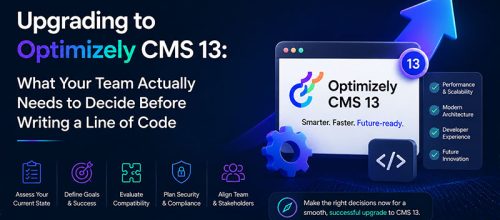
- Learn how to plan an Optimizely CMS 13 upgrade with .NET 10, Optimizely Graph, Visual …Read More »
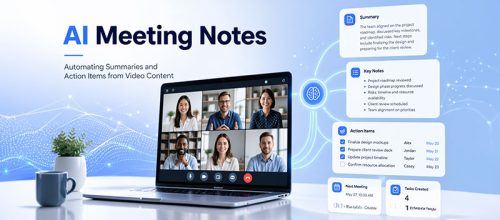
- Learn how AI meeting notes automate summaries, action items, and insights from video meetings using …Read More »