

Home > Blogs > Test Automation > Enterprise Change Management: A Comprehensive Technical Implementation Guide

Global Head
July 22, 2025

Introduction
This blog offers a step-by-step technical guide on how to implement change management in large organizations. From process design and automation to risk assessment and training, we’ll walk through the essential phases required to build a scalable, Enterprise Change Management implementation.
At Royal Cyber, we help enterprises take the guesswork out of change. With our expertise in designing and deploying Enterprise Change Management systems, we deliver structured frameworks, automated workflows, and seamless integration with your IT ecosystem. Whether you’re building from the ground up or optimizing existing processes, Royal Cyber ensures your Enterprise Change Management strategy not only supports growth but drives long-term stability and compliance.
Problem Statement/Objective
Primary Challenges
- Where the danger of service downtime is in question, uncontrolled change more often than not leads to outages that negatively impact customer experience and business operations
- Standardization can make enterprise change management seem like a formidable task, especially when departments and teams each have their own processes.
- Inadequate Risk Assessment is also an issue; if organizations do not thoroughly study the potential implications of their changes, they can have unplanned failures and rollbacks
- Managing several stakeholders and communicating effectively along the change life cycle may also be extremely difficult at times.
- Standard compliance: organizations need to consider compliance and audit requirements to maintain operational efficiency.
Core Objectives
- Reduce Service Disruption: Develop processes that minimize or eliminate the risk of interrupting services during the implementation of change.
- Standardize: Design repeatable, consistent processes for all change-related work.
- Control Risk: it is important to establish unambiguous procedures to measure and control risk.
- Communication with stakeholders is crucial, therefore communicate clearly and in good time to all who will be affected by the change.
- Stay Compliant: Establish trails that identify, and documentation standards that are compliant with regulatory requirements.
Planning Phase
Phase 1: Assessment and Analysis
- Current State Analysis: Understand current change processes and identify gaps
- Stakeholder Mapping: Identify roles and responsibilities for all change management participants
- Tool Selection: Identify appropriate tooling for tracking changes and managing the workflow
- Risk Assessment Framework: Establish a set of criteria for assessing potential impacts of changes and their associated risks
Phase 2: Process Design
- Workflow Definition: Design standardized change processes for different categories
- Approval Hierarchies: Develop structures for Change Advisory Board (CAB) and Emergency Change Advisory Board (ECAB)
- Documentation Standards: Develop templates and standards for changing documentation
- Communication Protocols: protocols for escalation and notification is also important.
Phase 3: System Configuration
- Tool Implementation: Configure change management tools and integrate with existing systems.
- Access Controls: Configure role-based access controls and security levels.
- Automation Setup: Configure automated workflows and notifications
- Dashboard Creation: Develop monitoring and reporting dashboards for change tracking
Phase 4: Training and Rollout
- Team Training: Provide full training for all stakeholders.
- Pilot Implementation: Implement changes as a pilot to test the out systems and make improvements.
- Process Refinement: Adjust processes based on the pilot’s findings.
- Full Deployment: Deploy the change management system organization wide.
Implementation Steps
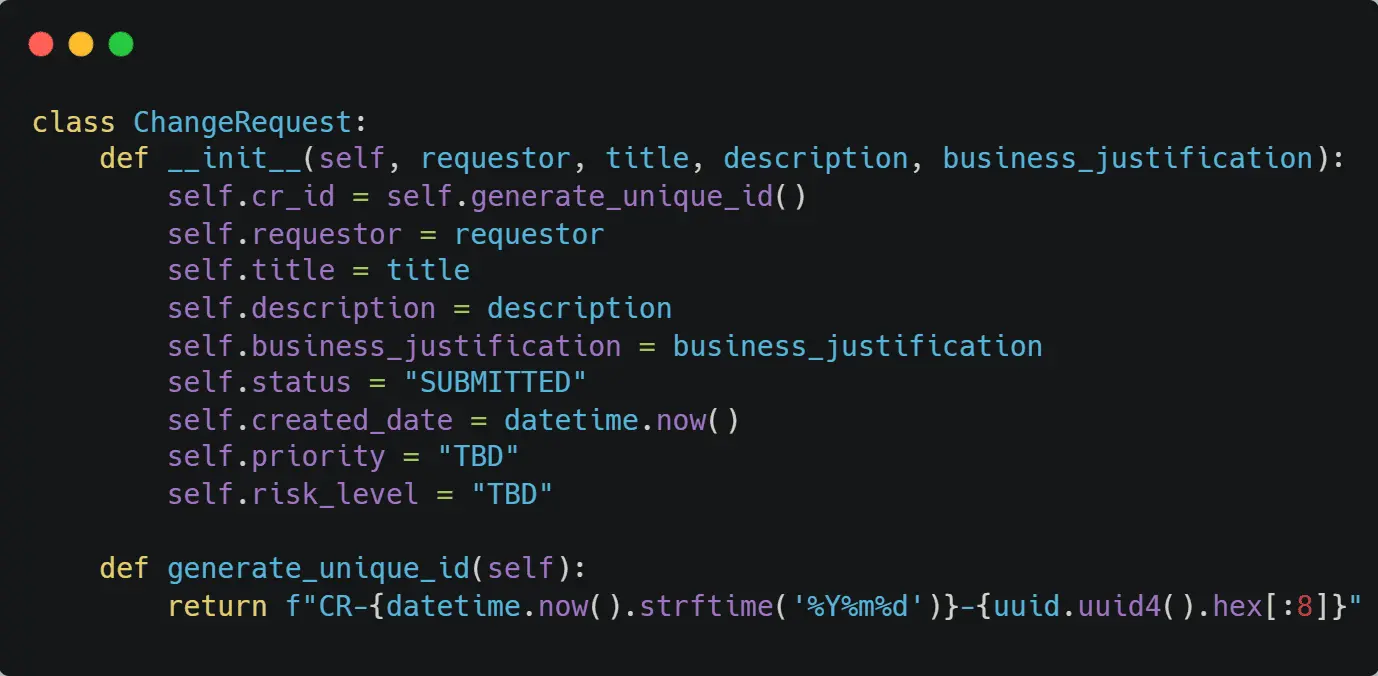
Step 1: Change Request Logging System
The foundation of effective enterprise change management begins with a robust change request logging system. This system must capture all essential information required for proper change evaluation and tracking.

Key Components:
- Unique change identifier generation
- Requestor information and contact details
- Business justification and impact assessment
- Technical implementation details
- Proposed timeline and resource requirements
Change Request Creation:
Step 2: Change Classification Engine
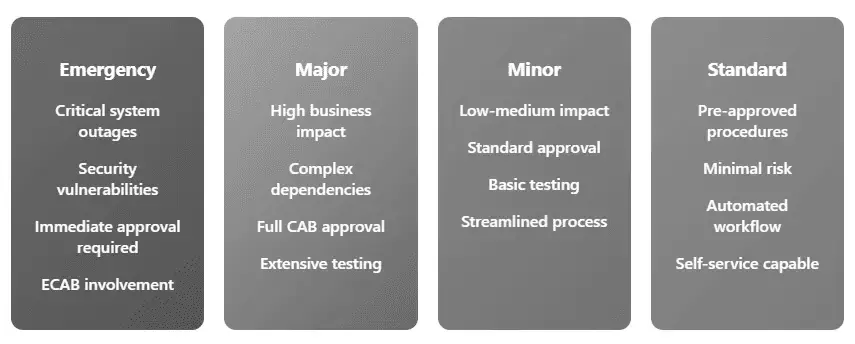
Classification Matrix Implementation:
- Emergency Changes: High business impact, immediate implementation required
- Major Changes: Complex implementation, high/medium risk, CAB approval required
- Minor Changes: Low complexity, minimal risk, streamlined approval process
- Standard Changes: Pre-approved, repeatable changes with established procedures
Auto-Classification:

Step 3: Workflow Automation System
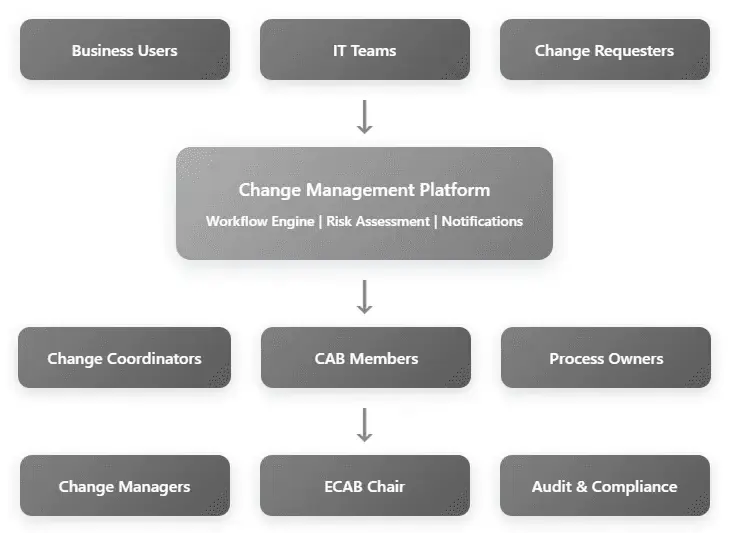
Workflow Components:
- Automated routing based on change category
- Approval notifications and escalations
- Status tracking and updates
- Integration with deployment systems
Workflow State Machine:

Step 4: Risk Assessment Framework

Risk Evaluation Criteria:
- Technical complexity and dependencies
- Business impact and affected services
- Implementation timeline and resource requirements
- Rollback procedures and contingency plans
Step 5: Deployment Management Integration
An Enterprise Change Management should also integrate with deployment management systems in order to facilitate the seamless transition from approval into implementation, while still being able to be monitored and controlled.
Integration Points:
- Automated deployment scheduling
- Pre-deployment validation checks
- Post-deployment monitoring and verification
- Rollback triggers and procedures
High-Level Solution Design and Architecture
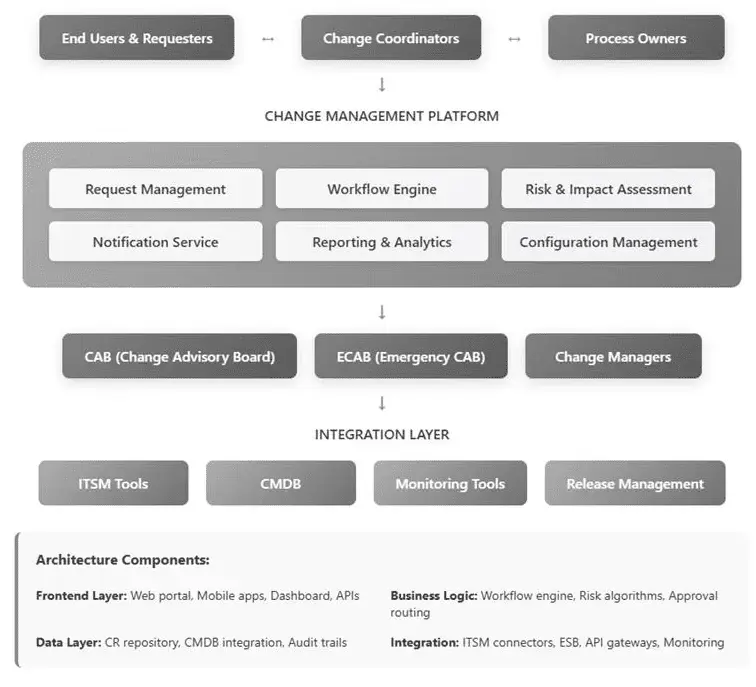
Architecture Overview
The Enterprise Change Management system is configured following a multi-tier architecture that is scalable, reliable, and integrates with existing IT service management tools.
Tier 1: Frontend Layer
- Web-based user interface for change submission and tracking
- Mobile applications for approval workflows
- API endpoints for system integrations
- Dashboard and reporting interfaces
Tier 2: Business Logic Layer
- Change classification and routing engines
- Workflow orchestration services
- Risk assessment and impact analysis modules
- Notification and communication services
Tier 3: Data Layer
- Change request repository
- Configuration management database (CMDB) integration
- Audit and compliance data storage
- Historical analytics and reporting data
Tier 4: Integration Layer
- Service management tool integrations (ITSM)
- Configuration management systems
- Deployment and orchestration platforms
- Monitoring and alerting systems
Component Interactions
Security and Compliance
Metrics and KPIs
- Change success rate and failure analysis
- Mean time to implement approved changes
- Emergency change frequency and trends
- Stakeholder satisfaction scores
- Compliance audit results
Training and Documentation
- Role-based training materials
- Process documentation and standard operating procedures
- Video tutorials and interactive guides
- Regular refresher training sessions
- Knowledge base and FAQ resources
Governance and Oversight
- Change Advisory Board meeting cadence and effectiveness
- Process performance reviews and optimization
- Compliance monitoring and reporting
- Incident correlation and root cause analysis
Implementation Challenges and Resolutions
Stakeholder Resistance and Adoption
- Teams often resist adoption of new processes and procedures since they see them as bureaucratic bloat which inevitably slows down development and deployment work streams.
- Resolution: Start small with a phased rollout with a few early wins, provide good training, and demonstrate value by providing quantifiable measurements showing incidents have decreased and service stability has improved.
Integration Complexity with Existing Systems
- Challenge: Legacy systems and multiple toolsets create integration complexities requiring deep customization, and potential disruption to current workflows.
- Resolution: Establish standardized APIs and integration patterns, use middleware solutions to translate systems to where they will work together, while honoring a backward compatibility during the transition.
Balancing Agility with Control
- Challenge: Organizations often wrestle with maintaining the velocity of development and at the same time, need to support and implement the necessary change controls. This tension can end in process bending or process bureaucracy burden.
- Resolution: Streamline low risk change paths, automate validations and tests, and define escalations for urgent needs.
Risk Assessment and Impact Analysis
- Challenge: When dealing with very complex and interrelated systems, determining the real impact for changes becomes cumbersome. Even the best organizations can struggle to carry out detailed risk evaluations, which lead to unanticipated service outages.
- Resolution: Full CMDB solutions, use dependency mapping tools, use historical data to predict future impacts and create feedback loops in the process for continuous improvement.
Data Quality and Consistency
- Challenge: The more information we try to manage in change records, the more difficult it becomes to ensure we have accurate and up to date information with respect to those records. This can have a significant influence of the quality of decision-making and makes audit compliance almost impossible.
- Resolution: Create data validation rules, with mandatory fields, implementation of automated data synchronizations, and planned data quality audit cycles.
Key Takeaways
Standardization Impacts Efficiency
- Standardization is Key Standardizing processes across all teams reduces processing time and improves consistency. Organizations see 30-40% fewer change related incidents when following a structured process
- Automation is Scalable Automated workflows and approval routing allows organizations to handle more change without more administrative overhead. This is especially the case in DevOps and continuous delivery teams.
- Stakeholder Involvement is Key Success is really based on involving stakeholders from the very beginning and keeping them as part of the process all along. Organisations that take the time to train and do enterprise change management will have higher adoption rates and better compliance with their processes.
- Smooth Integration with Existing Tools is a necessity Joining with existing ITSM, monitoring, and deployment tools helps build a smooth working platform. Integration of this nature reduces manual intervention and improves data accuracy across service management.
- Continuous Improvement Matters Utilizing feedback loops and process reflection on a continuous basis enables the change management system to evolve with time in conjunction with the organization. Organizations that hold retrospectives and change their processes gain long-term effectiveness and efficiency.
Final Words
Author
Zeeshan Mukhtar
Agentforce and Microsoft Copilot Studio are the two dominant enterprise…
Read More »
Websites used to be something you built once and basically…
Read More »
Websites used to be something you built once and basically…
Read More »