
Home > Blogs > ServiceNow > How to Implement ServiceNow AI for Task Automation
February 18, 2026
How to Implement ServiceNow AI for Task Automation
Table of Contents
Implementing ServiceNow AI has become a strategic requirement for businesses looking to optimize operations, cut costs, and improve service delivery. The platform is revolutionizing the way big businesses handle everything from complicated operations to IT incidents with its powerful AI capabilities, which include agentic AI. With the help of this guide, enterprise architects and IT leaders may effectively use ServiceNow AI for task automation while guaranteeing a quantifiable return on investment.
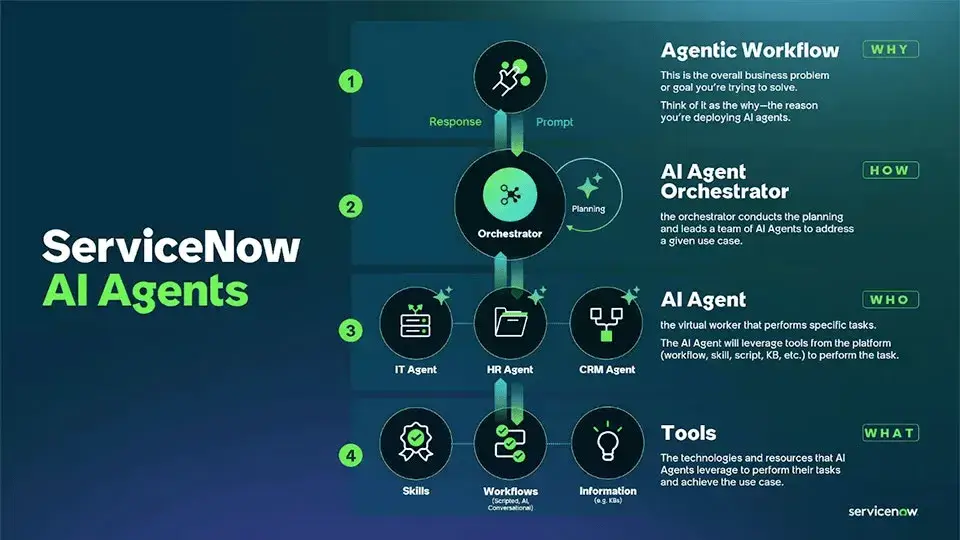
ServiceNow AI is a collection of artificial intelligence, machine learning, and natural language processing technologies built within the ServiceNow platform. These capabilities are intended to automate repetitive operations, anticipate possible problems, and offer intelligent support for customer service management (CSM), HR service delivery (HRSD), IT service management (ITSM), and other enterprise workflows. By 2026, autonomous systems that evaluate data, make decisions, and carry out end-to-end tasks will be made possible by ServiceNow AI capabilities, completely changing service management for big businesses.
Want to go deeper into AI-driven ITSM?
Why ServiceNow AI Matters for Enterprise Automation
ServiceNow AI has a tremendous impact on corporate operations by reducing costs, increasing efficiency, and improving service delivery. With the help of integrations with cutting-edge AI models like OpenAI Frontier models, the platform handles more than 80 billion workflows for businesses each year. This automation generates tangible benefits:
- Cost Savings: By lowering human touches per incident, businesses can save $600K–$1.5M and save after-hours expenses by $200K–$600K.
- Efficiency Gains: AI-powered auto-remediation reduces mean time to resolution (MTTR) by 40–70%.
- Improved Service Delivery: Virtual agents reduce major issue resolution times by up to 25 minutes and increase deflection rates by 10%.
Enterprises can automate various functions, including incident management (predictive assignment and resolution), request fulfillment (virtual agents), and workflow optimization (proactive problem detection). While initial deployments can take 3-6 months, full-scale implementation may extend to 12-18 months, depending on organizational complexity and data readiness.
Prerequisites: Assessing Your Enterprise Readiness
It is essential to thoroughly evaluate your company’s preparedness before deploying ServiceNow AI. This include assessing the data quality, integration requirements, team capabilities, and current ServiceNow instance.
- ServiceNow Instance Maturity and license: Make that your current ServiceNow instance is stable and satisfies the minimal license requirements. For AI features like Now Assist, a Pro Plus tier is frequently required.
- Data Integrity and Quality: Clean, high-quality data is essential. Determine and map integration points with current systems, such as SAP, Oracle, and Salesforce, keeping in mind that 95% of businesses identify integration as the biggest obstacle to AI adoption.
- Stakeholder Buy-in and Change Management: Since AI implementations are “still in its relative infancy” for many, obtain executive sponsorship and get ready for change management to promote user acceptance.
- Technical Team Training and Skills: Evaluate the AI and machine learning abilities of your team. To fill these skill gaps, make plans for training or think about adding knowledgeable partners like Royal Cyber to your team.
ServiceNow AI Capabilities Comparison: Which Automation Features to Prioritize
This table compares key ServiceNow AI automation capabilities to help enterprises determine which features deliver the highest ROI for their specific use cases and organizational maturity level.

| AI Capability | Primary Use Case | Implementation Complexity | Typical ROI Timeline | Best For |
| Virtual Agent | L1 ticket deflection, self-service, routine query resolution | Medium | 3-6 months | Reducing support agent workload, improving user experience |
| Predictive Intelligence | Incident categorization, assignment, resolution prediction | Medium to High | 6-12 months | Optimizing IT operations, proactive problem management |
| Performance Analytics AI | Anomaly detection, trend analysis, root cause prediction | High | 9-15 months | Strategic decision-making, continuous service improvement |
| Agent Intelligence | Automated task resolution, proactive problem solving | High | 12-18 months | Autonomous operations, reducing human intervention |
| Workflow Automation AI | End-to-end process automation across departments | Medium to High | 6-12 months | Streamlining cross-functional processes, compliance |
| Natural Language Understanding (NLU) | Understanding user intent, improving conversational AI accuracy | Medium | 3-6 months | Enhancing Virtual Agent and AI Search effectiveness |
Step 1: Identify the Use Cases and Priorities for Automation
The first stage is to identify high-impact tasks that can be automated by AI. Concentrate on areas where AI can provide the biggest, most quantifiable benefits.
Target high-volume, repetitive jobs that are prone to human mistake or that need to be completed quickly in order to identify high-impact processes. Examples are L1 ticket deflection and predictive incident routing.
Calculate ROI possibilities for each use case, including cost savings (e.g., FTE avoidance) and efficiency advantages (e.g., reduced MTTR). A multinational enterprise reduced monthly notifications from 12,000 to 2,500 actionable issues, saving around $600K annually.
- Prioritization Framework: To set priorities, use a matrix that compares complexity to business value. To gain momentum and show rapid success, start with high-value, low-complexity automations.
- Common Enterprise Use Cases: Virtual agents for self-service, predictive intelligence for incident assignment and categorization, and auto-classification of incoming requests are prime candidates
Step 2: Configure ServiceNow AI Foundation Components
Establishing the foundational components within ServiceNow is critical for effective AI deployment. This involves setting up NLU models, Predictive Intelligence, and robust governance.
- Setting up Natural Language Understanding (NLU) Models: Develop NLU models tailored to your organization’s specific terminology and intent. Best practices include using realistic, varied training utterances from live chats and avoiding ambiguity as recommended by ServiceNow.
- Configuring Predictive Intelligence Applications: Implement Predictive Intelligence models for tasks like incident assignment, categorization, and major incident detection. Ensure continuous model retraining (e.g., every 30 days) and monitoring via the Predictive Intelligence Workbench .
- Establishing AI Governance Policies: Define clear AI governance policies and approval workflows to manage model accuracy, data privacy, and compliance. This is crucial as “shadow AI” models developed outside governance frameworks can introduce significant risks .
- Integration Setup: Configure integrations with enterprise data sources and third-party systems using IntegrationHub and APIs to ensure seamless data flow and end-to-end automation.
Step 3: Build and Train Your AI Models
Building and training AI models requires a data-driven, iterative approach to ensure accuracy and relevance to your enterprise’s unique needs.
- Training Virtual Agents: Train virtual agents with enterprise-specific knowledge articles, FAQs, and terminology. Leveraging GenAI for intent training can automate updates to intent libraries and improve semantic search, reducing L1 ticket escalations by 30-40% .
- Creating Prediction Models: Develop prediction models for tasks such as incident assignment, categorization, and resolution. Custom training on historical data can achieve 90% accuracy for specific bots .
- Testing Model Accuracy and Benchmarks: Rigorously test model accuracy using precision, coverage, and recall metrics. Establish performance benchmarks to track improvements and identify areas for refinement. ServiceNow Predictive Intelligence typically achieves 85-95% accuracy with proper training .
- Iterative Refinement: Continuously refine models based on initial results, user feedback, and new data. This iterative process is essential for maintaining high accuracy and adapting to evolving business needs.
Step 4: Deploy AI Automation in Phases
Phased deployment of AI automation reduces risk and enables ongoing optimization and learning. Pilot programs are a good place to start first.
- Pilot Deployment Strategy: To show value fast, start with low-risk, high-visibility procedures. This strategy gathers early input and fosters internal confidence.
- Tracking AI Performance and Adoption: Keep an eye on indicators related to AI performance, such as user adoption, ticket deflection rates, and MTTR reduction. This information is essential for confirming ROI and pinpointing areas in need of development.
- Expanding Successful Automations: After a pilot project is successful, expand automations throughout departments and regions. This sometimes includes adapting models to different business divisions and connecting with other systems.
- Handling Edge Cases and Fallback Procedures: Design robust fallback procedures for scenarios where AI confidence is low or when encountering edge cases. Human oversight remains critical to mitigate AI hallucinations and blind spots .
Step 5: Optimize and Scale Your AI Automation
Continuous optimization and scaling are essential for maximizing the long-term value of your ServiceNow AI investment. This involves ongoing model retraining and expanding the scope of automation.
- Continuous Model Retraining: Retrain models regularly with new data and user interactions to maintain accuracy and adapt to changing patterns. This ensures that AI remains relevant and effective.
- Expanding Automation Scope: Based on success metrics and user feedback, identify new opportunities to expand automation. This could involve automating more complex workflows or extending AI to other business functions like HR or customer service.
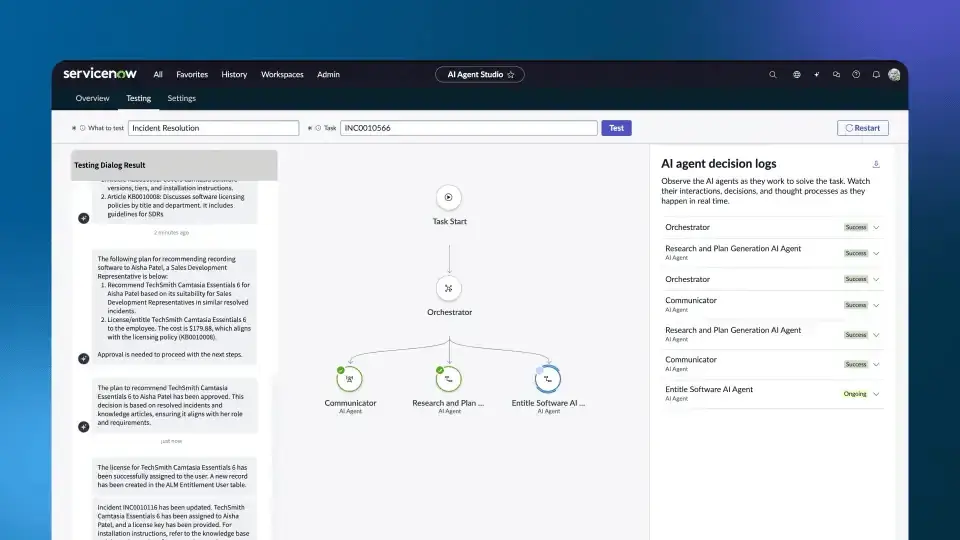
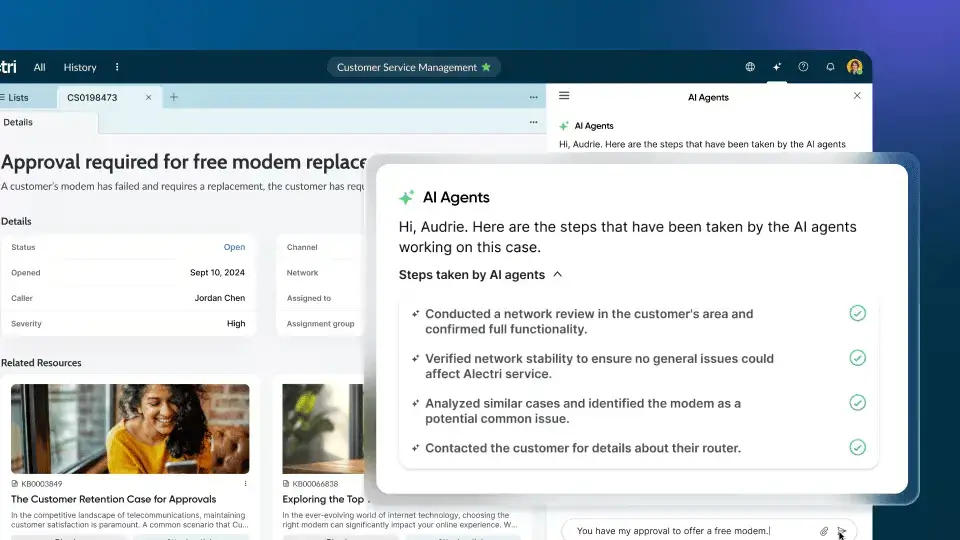
- Integrating Advanced Features: Explore and integrate advanced AI features such as workflow recommendations, proactive problem detection, and self-healing infrastructure. Agentic AI, for example, enables autonomous systems to diagnose, plan, and execute multi-step workflows .
- Measuring Long-Term Business Outcomes: Track and measure long-term business outcomes, such as overall operational efficiency, employee productivity, and customer satisfaction, to demonstrate the enduring value of AI to stakeholders. AstraZeneca, a Fortune 500 company, saves 30,000 hours annually by reducing tasks from 30 minutes to seconds using ServiceNow AI.
Key Takeaways
- ServiceNow AI provides significant cost savings and efficiency gains through automation of incident management, request fulfillment, and workflow optimization.
- Thorough readiness assessment, including data quality and stakeholder buy-in, is crucial for successful implementation.
- Prioritize automation use cases with high ROI potential, such as virtual agents and predictive intelligence for incident resolution.
- Robust NLU model training and AI governance policies are foundational for accurate and compliant AI operations.
- Phased deployment, continuous monitoring, and iterative model refinement are essential for scaling and long-term success.
Royal Cyber offers expertise to accelerate ServiceNow AI adoption and maximize ROI for large enterprises.
Speak with a ServiceNow Expert
Conclusion: Accelerating Your ServiceNow AI Journey
Using ServiceNow AI to automate tasks is a smart investment for large organizations and can deliver strong long-term benefits. By taking a step-by-step approach , starting with understanding readiness, choosing the right use cases, rolling out solutions gradually, and improving them over time companies can boost efficiency, reduce costs, and improve service quality. Success depends on having clean, reliable data, properly training AI models, putting the right controls in place, and continuously making improvements.
With strong experience in ServiceNow projects, Royal Cyber helps organizations adopt AI faster and get better results. We guide enterprises through the process and ensure their ServiceNow AI efforts deliver clear and measurable business value.
Frequently Asked Questions (FAQs)
Q1 What is ServiceNow AI and how does it automate enterprise tasks
ServiceNow AI is a suite of machine learning and natural language processing capabilities built into the ServiceNow platform. It automates tasks by intelligently routing incidents, fulfilling requests, suggesting knowledge articles, and predicting problems before they occur, all without manual intervention. This includes agentic AI capabilities that autonomously diagnose, plan, and execute multi-step workflows .
Q2 How long does it take to implement ServiceNow AI in a large enterprise
Initial deployments of ServiceNow AI typically take 3-6 months for specific use cases. Full-scale, platform-wide implementations in large enterprises can range from 12-18 months. Factors affecting this timeline include organizational complexity, data quality, the scope of automated tasks, and the readiness and skill level of the internal team.
Q3 What is the ROI of implementing ServiceNow AI for task automation
Implementing ServiceNow AI delivers significant ROI, including a 40–70% faster mean time to resolution (MTTR) and $500K–$2M in annual savings from auto-remediation Enterprises can also see a 30-40% reduction in Level 1 tickets through virtual agent deflection and annual savings of over $600K by reducing actionable incidents .
Q4 Do I need a dedicated AI team to implement ServiceNow AI
While basic AI features can be implemented by experienced ServiceNow administrators, complex deployments benefit significantly from data scientists, AI specialists, and change management resources. Partners like Royal Cyber can provide the necessary expertise and resources to augment internal teams, ensuring successful implementation and optimization without requiring a full in-house AI team.
Q5 Can ServiceNow AI integrate with our existing enterprise systems like SAP and Salesforce
Yes, ServiceNow AI is designed for robust integration with existing enterprise systems like SAP, Oracle, and Salesforce. It leverages IntegrationHub and APIs to seamlessly connect with ERP, CRM, and other critical systems, enabling end-to-end automation and unified workflows across your entire technology stack .
Author
Pooja Reddy Sodum
Marketing Executive
Talk To Our Experts
Recent Blogs
June 9, 2026
Agentforce and Microsoft Copilot Studio are the two dominant enterprise…
Read More »
June 4, 2026
Websites used to be something you built once and basically…
Read More »
June 4, 2026
Websites used to be something you built once and basically…
Read More »