

Home > Blogs > Middleware > Powering Seamless Connectivity: Navigating Enterprise Integration in a Multi-Cloud World

Practice Lead Middleware
July 9, 2025
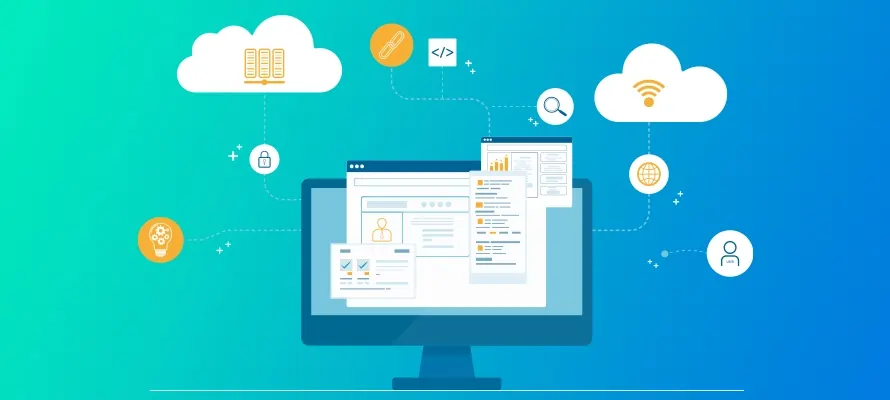
Introduction
Organizations can no longer depend on monolithic systems or single-vendor platforms. As organizations develop applications and services, from SaaS applications to legacy workloads in on-prem environments, companies now manage dozens of systems (all of which generally need to be integrated in real-time, with security, with some intelligence).
Traditional middleware is no longer enough. In order to be agile and competitive, o compete and move faster, organizations must shift to a modern integration platform that allows them to break silos, enforce governance, and permit automation within a multi-cloud, hybrid IT space.
Why Application Integration Matters and the Strategic Role of API Gateways
In a digital-first enterprise, integration is no longer an afterthought, it is an enabler of innovation. Whether this is a seamless customer journey, or a simple need to connect data from a CRM system, ERP system, and an analytics platform, your organization’s next digital initiative will be dependent on how well these applications can communicate.
The Integration Imperative
Enterprise ecosystems have grown complex. There’s an ever-increasing need to:
- Synchronize data across cloud and on-prem environments
- Trigger real-time workflows across distributed systems
- Ensure compliance in handling sensitive data
- Accelerate time-to-market by composing new digital services
Innovation slows or does not happen because applications are not well integrated, this creates difficulties to allow businesses to be agile, it puts compliance at risk, there is data in silos, inefficient processes and increases risks of compliance. Integration is the vital link to disconnected apps. Integration is the way to maximize fragmented applications, automate manual processes, and allow for an overall single view of enterprise data.
API-Driven Integration: The New Standard
APIs (Application Programming Interfaces) have become the default mechanism for connecting. Adopting an API-first mentality allows teams to separate systems, re-use systems, and utilize a plug-and-play model for their digital capabilities.
APIs expose core business functions and data in a standardized and secure manner that is standardized and secure for:
- Faster delivery of new services through modular design
- Better governance through centralized policy enforcement
- Improved partner collaboration via open interfaces
- Enhanced observability across all service interactions
An API-led integration provides IT teams the ability to react to business requirements with speed, deliver consistent service functionality, and offer architectural flexibility.
Enter the API Gateway
With APIs fast becoming the new integration fabric, API gateways are now essential infrastructure to control, secure and monitor API traffic. Acting as a control plane between clients and services, they guarantee that each API invocation is:
- Authenticated to confirm identity
- Authorized to validate permissions
- Rate-limited to prevent abuse
- Monitored and logged for security and analytics
- Transformed to bridge protocol or data format differences
Top API gateways in the marketplace today Apigee, IBM API Connect, Azure API Management, and Amazon API Gateway – enable these capabilities at scale. It’s through API gateways, while building in policy enforcement and routing logic, that simplify complexity in back-end services and make systems more resilient.
| Capability | Impact |
|---|---|
| Traffic Management | Control and throttle API usage to protect backend systems |
| Security Enforcement | Supports OAuth2, JWTs, API keys, and IP Filtering |
| Protocol Transformation | Convert between REST, SOAP, gRPC, WebSockets, etc. |
| Policy Enforcement | Apply logging, quotas, validation, and caching rules |
| Observability | Capture metrics, logs, and alerts for governance and SLA |
Core Capabilities of Modern Integration Platforms
Modern integration platforms must do more than manage APIs; they also facilitate data movement, orchestration and connectivity needs. This requires a modular architecture with several integrated capabilities:
iPaaS (Integration Platform as a Service)
iPaaS platforms contain prebuilt connectors, transformation tools, and architectural designers for connecting SaaS apps, databases, legacy applications, and cloud-native services with little to no coding. For examples of vendors who provide iPaaS functionality we can look at MuleSoft, Boomi, and IBM App Connect, etc.
Event-Driven Architecture (EDA)
With event-driven architectures, you separate producers from consumers by publishing your data as events. This is also a consistent pattern for the eventing of the IoT, e-commerce, and supply chain systems and enables real-time responsiveness and the ability to scale quickly when needed. Event-driven platforms like Kafka, EventBridge, and Pub/Sub provide high-throughput streaming capabilities of events and distribution to multiple subscribers or consumers.
Data Pipelines & Streaming
Data pipelines ingest data and move data in various layers. Tools such as Apache NiFi, Google Dataflow and Azure Data Factory can support your need to transform or enrich data while streaming into a data pipeline to provide immediate actions for insights and/or compliance, or support machine learning use cases.
Hybrid & Multi-Cloud Support
Current integration must enable data and processing exchanges among private data centers, edge devices, and multiple public clouds. Middleware solutions must offer:
- Uniform integration logic across environments
- Consistent policy enforcement and monitoring
- Minimal latency and high availability
Security, Observability & Governance
Security is baked into modern integration design through:
- Encryption in transit and at rest
- API security policies and identity management
- Role-based access control (RBAC) and least privilege enforcement
Observability is also as important; logs, metrics, and distributed tracing provide insight into transaction health, how systems perform, and violations of policy. Along with audit logs and compliance tooling, enterprises can provide a level of trust and accountability.
Integration in Action: Use Cases Across Industries
Banking & Financial Services
- Integrate mobile applications, payment services, and KYC databases
- Use event streaming for real-time fraud detection
- Support regulatory compliance with policy-based APIs
Retail & E-Commerce
- Sync inventory and orders across POS, ERP and Warehouse Management Systems
- Leverage APIs to enable partner storefront integrations
- Use customer data pipelines for personalization
Healthcare
- Integrate EHR systems with labs and insurance providers using HL7/FHIR APIs
- Simplify patient onboarding and claims processing
- Ensure HIPAA compliance through encrypted integration flows
Manufacturing & Logistics
- Track assets using IoT events from vehicles and machines
- Use real-time data for supply chain forecasting
- Integrate legacy MES/ERP systems with cloud analytics
Common Challenges and How to Overcome Them
| Challenge | Resolution |
|---|---|
| Siloed Legacy Systems | Use API wrappers and adapters for legacy interfaces |
| Lack of Standardization | Define enterprise-wide API schemas and integration patterns |
| Low Observability | Implement tracing and telemetry with distributed monitoring tools |
| High Change Impact | Adopt decoupled architecture using microservices and queues |
| Scaling Bottlenecks | Scaling Bottlenecks |
| Compliance Risk | Centralize policy control and enable data residency enforcement |
Benefits Delivered: Integration as a Value Driver
| Business Objective | Enabled Through |
|---|---|
| Business Agility | Modular APIs, event triggers, low-code integrations |
| Security & Compliance | Identity-aware gateway, encrypted flows, governance policies |
| Operational Efficiency | Workflow automation, error handling, monitoring |
| Scalability & Resilience | Single pipelines, streaming, ready-for-ML data sets |
| Data Intelligence | Unified pipelines, streaming processing, ML-ready data sets |
Conclusion: Integration is the Foundation of Digital Success
Today’s enterprises are digital ecosystems that consist of hundreds of services, users, and touchpoints. Their success will ultimately be determined by how they connect and align these entities.
Modern integration platforms with APIs, event processing, gateways, and hybrid deployments make that connection, rapidly and accurately.
Middleware is no longer just the silent plumbing behind the curtain. It has emerged as the engine of business innovation, automation, and customer experience. CIOs, architects and middleware leaders must now view integration as a part of their strategic thinking and approach, and then provide the right tools, platforms and practices to support their teams.
The future will belong to those who master integration enabling them to lead with agility, intelligence, and innovation in the digital age.
Author
Muhammad Ovais
Agentforce and Microsoft Copilot Studio are the two dominant enterprise…
Read More »
Websites used to be something you built once and basically…
Read More »
Websites used to be something you built once and basically…
Read More »