Agentstudio is a layer on top of the Boomi Enterprise Platform. It gives you four things. An agent designer with prompts, tools, memory, and guardrails. A connector library that exposes every Boomi connector as an agent tool. A governance console that records agent invocations, costs, and decisions. An agent catalog that lets agents be invoked from chat, web pages, or other agents.
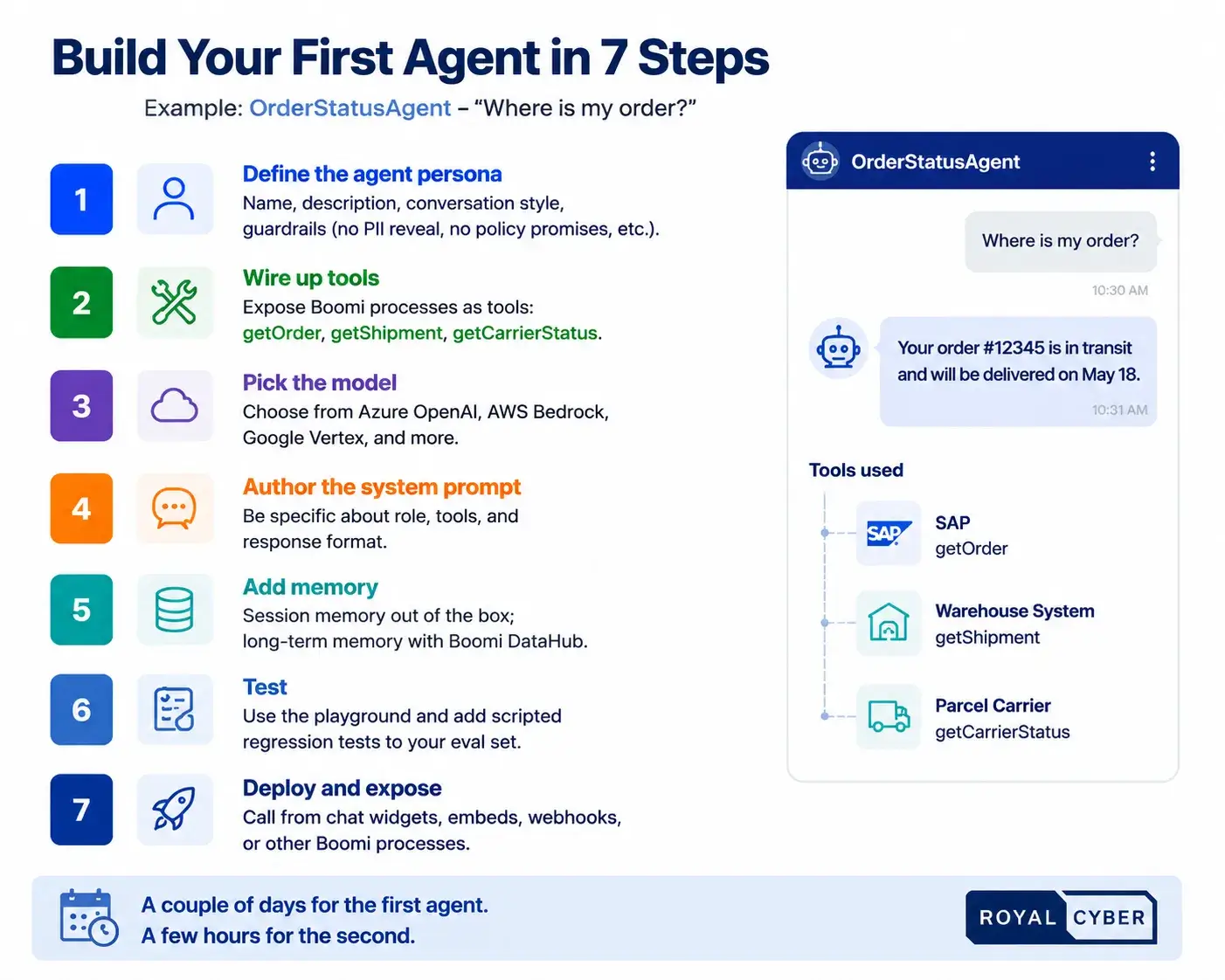
A practical walkthrough. The agent is “OrderStatusAgent” a customer-service helper that answers “Where is my order?” using SAP, the warehouse system, and the parcel carrier.
The whole sequence takes a couple of days for the first agent and a few hours for the second.
Don’t deploy Agentstudio agents in critical transactional paths without deterministic fallback. Agents are reasoning systems; they will occasionally hallucinate, misroute, or skip a step. Wrap them with explicit Boomi processes that enforce the business rules.
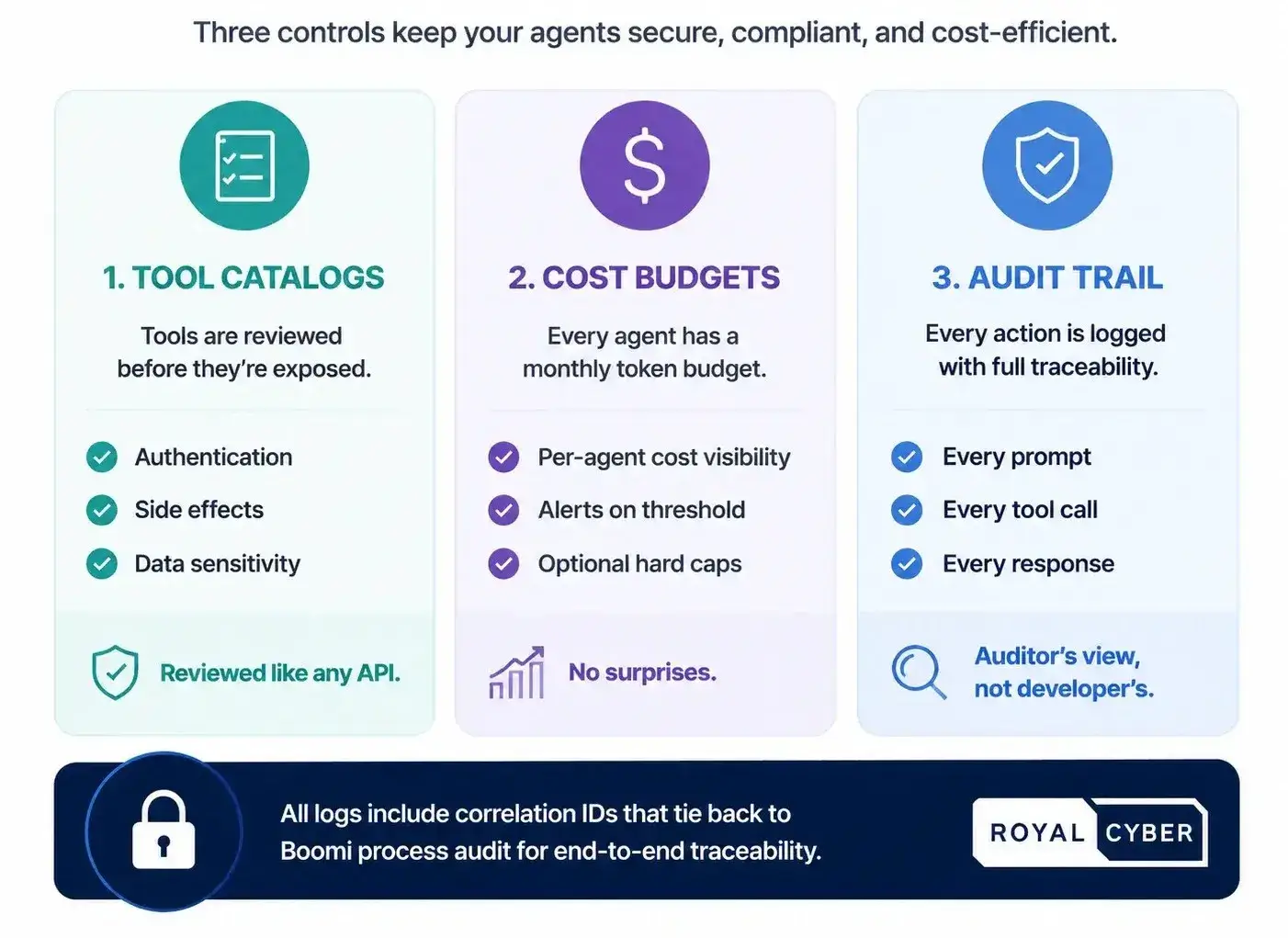
Three controls keep things sane.
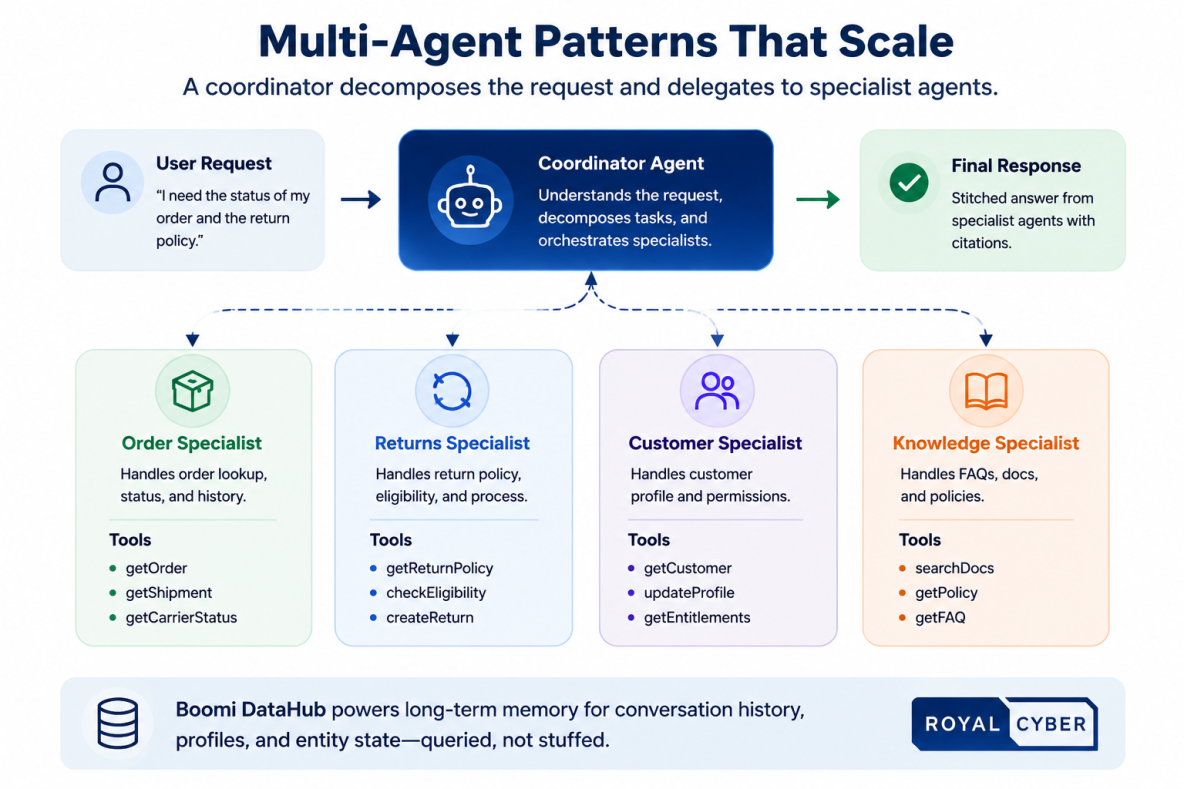
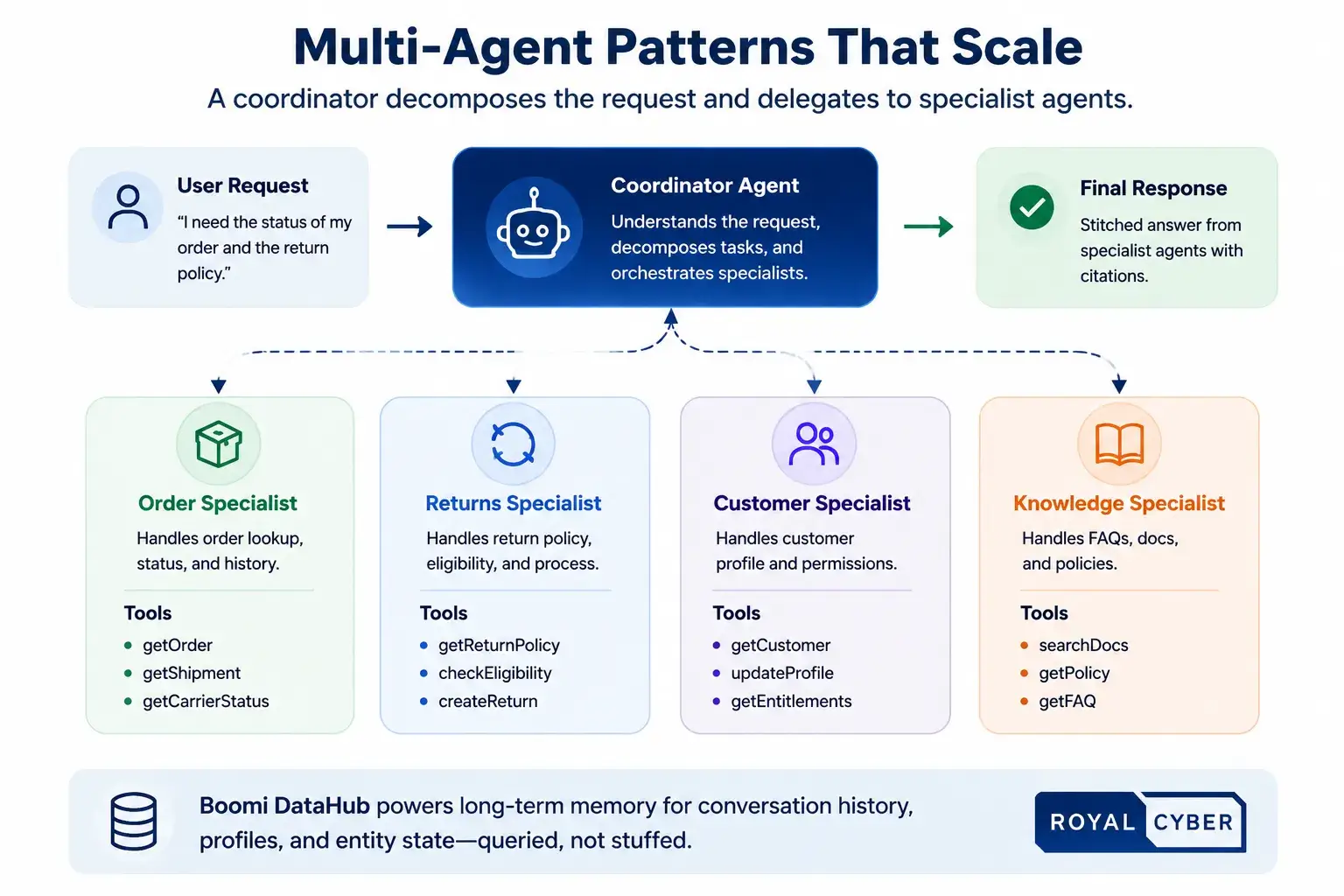
The most interesting designs use multiple agents. A “coordinator” agent decomposes a user request and delegates to specialist agents (one per business domain). Each specialist owns a smaller tool catalog and a tighter prompt. The coordinator stitches together a final answer. Boomi makes this easy because agents can call agents the same way they call any tool.
Long-term memory benefits from structured storage. We use Boomi DataHub to maintain conversation history, user profiles, and entity state that agents reference. This pattern keeps prompts small (because the memory is queried, not stuffed) and gives a single source of truth across agents.
Boomi has signaled tighter alignment between Agentstudio and DataHub, more model-agnostic features, and richer multi-agent capabilities. Expect the gap between Agentstudio and competitors (Mulesoft AI Agent Builder, ServiceNow agents) to be a moving target through 2026.
Agentstudio is the cleanest path to production AI agents we’ve seen for any iPaaS-anchored enterprise. The platform reuses what you already have, governs what you build, and accelerates what’s slow elsewhere. Start with one well-scoped agent, run it for a quarter, and let the wins fund the next.