

Modernizing E-commerce Infrastructure: A Complete Platform Transformation

Zeeshan Mukhtar
Global Head
August 29, 2025

Table of Contents
In the rapidly evolving world of high-performance digital commerce, competitiveness depends on the ongoing adaptation. Upgrading your e-commerce infrastructure isn’t a nice-to-have, it’s a must-have for scaling. In this post, we examine how a consumer beverages business transformed their disjointed legacy infrastructure into a high-performing, scalable platform through an adoption of a tech stack featuring Angular, .NET Core, and Azure Cloud. The result: a 3x increase in performance, 40% savings, and a future-proof solution.
As e-commerce platform modernization becomes more complex, Royal Cyber can help businesses make this transition smoothly. Contact us today to discuss how we can tailor a solution to meet your business needs.
Overcoming Common E-commerce Challenges with Smart Modernization
Our client, a consumer beverage company of the next generation, was struggling against its then-existing e-commerce setup that made it impossible to offer world-class digital shopping experiences. The legacy system had a broken architecture, latency, and poor scalability that stifled the growth aspirations of the company and its customers. This company-wide modernization initiative demonstrates how strategic technology choices, cloud-native designs, and modern software development techniques transform a struggling e-commerce platform into a business driver of competitiveness and high-performance digital commerce.
Problem Statement/Objective
Core Business Challenges
The initial client’s e-commerce website was beset by a number of architectural and operational deficiencies having a direct bearing on business performance:
Legacy Architecture Constraints:
- Fragmented Data Sources: A number of disparate systems storing product data, inventory data, and customer data without integration
- Monolithic Frontend: Old frontend stack causing slow page loads and poor user experience
- Backend Bottlenecks: Poor scalability of the backend infrastructure resulting in performance degradation under high traffic
- No Real-time Features: No real-time inventory feedback and system monitoring
Technical Debt Issues:
- Unpredictable User Experience: Inconsistent UI design patterns throughout parts of the platform
- Manual Integration Processes: Tedious manual procedures for integrating third-party vendors
- Poor Error Handling: Poor visibility into system failures and integration errors
- Scalability Constraints: Infrastructure cannot scale to keep up with growing customer base and transaction volume
Business Impact:
- Reduced Conversion Rates: Poor UX and slow loading resulting in cart abandonment
- High Operational Expenses: Resource-wasteful infrastructure consuming excessive resources
- Limited Personalization: Insufficient delivery of personal recommendations and directed experiences
- Vendor Integration Latency: Slow new supplier and product feed integration
Project Objectives:
- Performance Improvement: Achieve extreme improvements in page load time and overall system reductions
- Scalability Implementation: Prepare for rapid increases in users and transactions.
- Data Integration: Unified platform, effortless connectivity with all data sources and external systems.
- User Experience Optimization: Deliver a modern, responsive, and intuitive shopping experience
- Cost Optimization: Trade off infrastructure cost with durability and performance optimization
- Future-Proofing: Utilize modular architecture to be able to add features and upgrade technology easily
Facing challenges? Let Royal Cyber streamline your e-commerce
Technical Architecture and Implementation
Component-Based Architecture
Angular front-end has been created with a modular, component-based architecture that is easier to maintain and enables code reuse.

Techniques for Enhancing Efficiency
- Lazy Loading: Used route-based code splitting to reduce initial bundle size
- OnPush Change Detection: Optimized change detection strategy for better performance
- Virtual Scrolling: Implemented for large product catalogs to improve rendering performance
- Service Workers: Utilized PWA capabilities for caching and offline
Responsive Design Implementation
- Mobile-First Strategy: Created with mobile users as the top focus.
- Flexible Grid Framework: Utilized CSS Grid and Flexbox for adaptable design layout.
- Touch-Optimized Design: Enhanced for touch functionality and gesture control
Backend Architecture with .NET Core
RESTful API Design
The .NET Core Web API backend is RESTful in its dedication to brief resource-based endpoints:


Data Caching Strategy
- In-Memory Caching: Implemented using IMemoryCache for frequently accessed data
- Distributed Caching: Redis integration for shared cache across multiple instances
- Cache Invalidation: Smart cache invalidation based on data update events
Database Optimization
- Entity Framework Core: Used for ORM with optimized queries and connection pooling
- Database Indexing: Purposeful indexing of highly accessed columns
- Query Optimization: Employed efficient LINQ queries with minimal database round trips
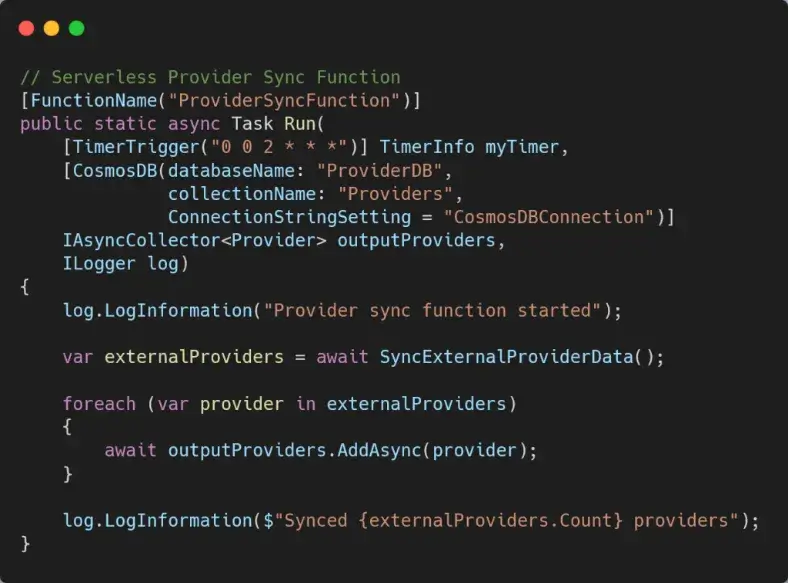
Azure Cloud Infrastructure
Serverless Computing with Azure Functions
Background processing and third-party integration are handled by Azure Functions:
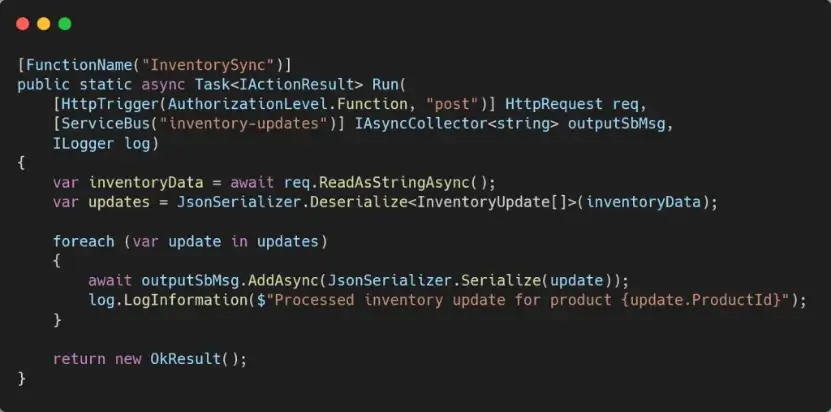
Storage Solutions
- Azure Blob Storage: Extremely optimised for product image storage, documents and media files
- Azure SQL Database: Primary transactional database with automatic scaling
- Content Delivery Network: Azure CDN for global content distribution
Integration Architecture
- Service Bus: Message queuing for reliable communication between services
- Event Grid: Event-driven architecture for real-time update
- API Management: Centralized gateway for security and monitoring of APIs
Data Integration & Real-Time Processing

Multi-Source Data Integration
The e-commerce platform modernization integrates data from various sources through a unified approach:
1. Product Catalog Integration
- Real-time synchronization with internal product management systems
- Automated product information updates and validation
- Support for multiple product variants and configurations
2. Inventory Management
- Real-time stock level updates from warehouse management systems
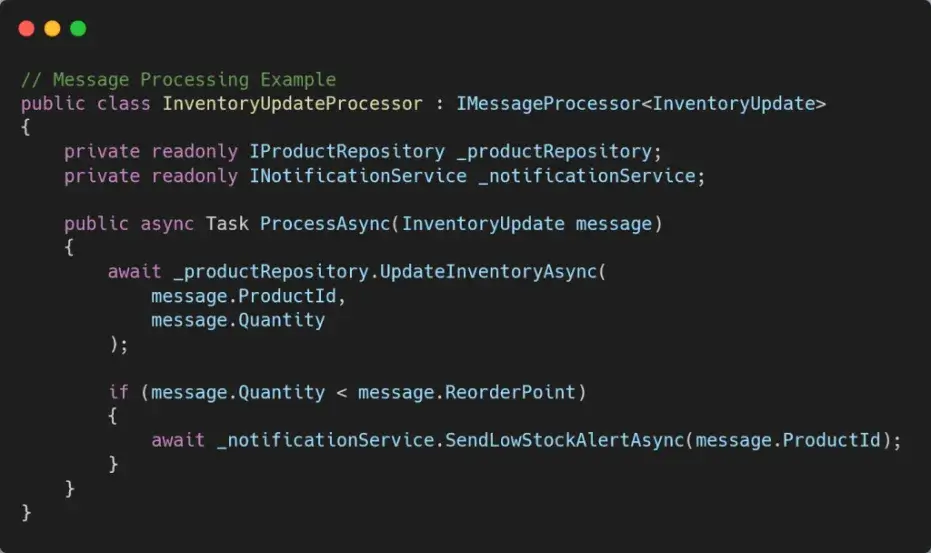
- Automated reorder point notifications
- Integration with multiple fulfillment centers
3. Third-Party Vendor APIs
- Standardized integration framework for vendor onboarding
- Automated data mapping and transformation processes
- Failover mechanisms for vendor API failures
4. Message Queue Architecture
DevOps & Deployment Pipeline
CI/CD Implementation
This is ensured by the Azure DevOps pipeline that trusted and efficient deployments occur.
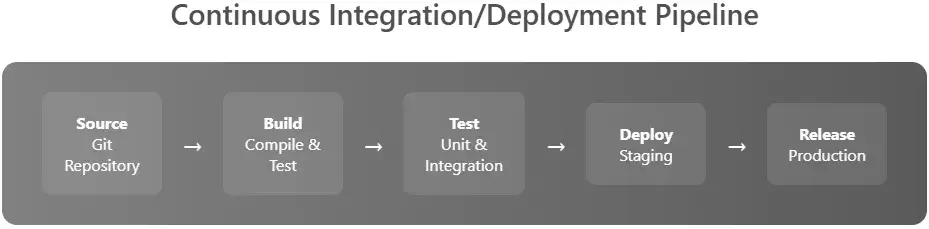

Infrastructure as Code
- ARM Templates: Automated Azure resource provisioning
- Environment Management: Isolated environment for development, staging and environments
- Automated Testing: Unit, integration, end-to-end tests
Monitoring & Observability
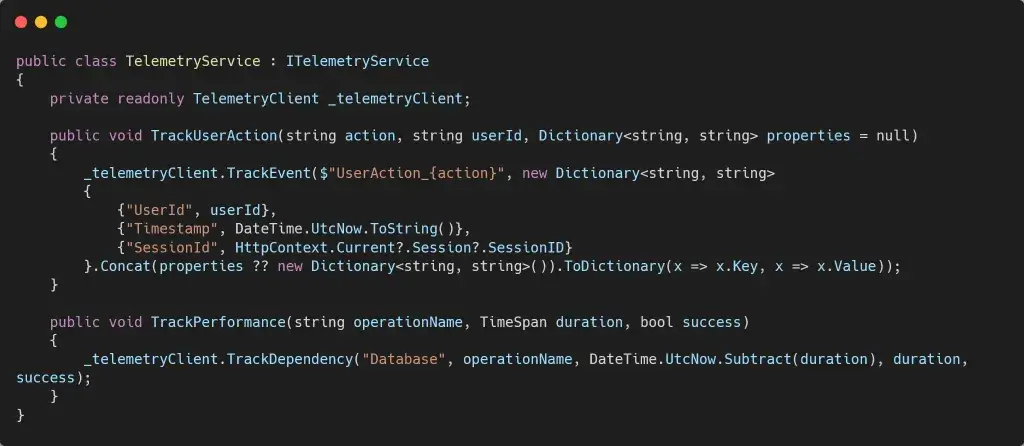
Application Insights Integration
Comprehensive monitoring and telemetry collection:
Real-Time Dashboards
- Power BI Integration: Business intelligence dashboards for sales analytics
- Azure Monitor: System health and performance monitoring
- Custom Alerts: Proactive notification system for critical issues
Technical Specifications & Configuration
Azure Services Configuration
- App Service Plan: Premium tier with auto-scaling capabilities
- Azure SQL Database: General Purpose service with 8 vCores
- Azure Functions: Serverless computing at cost with Consumption plan
- Application Insights: Full-stack analytics and monitoring
Security Implementation
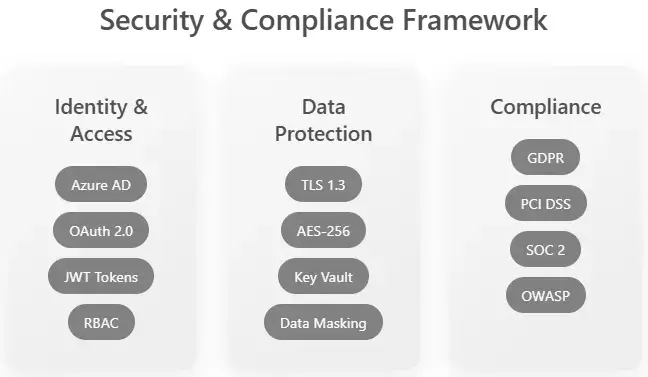
- Azure Active Directory B2C: Identity and access management
- JWT Authentication: Stateless authentication with refresh token rotation
- HTTPS Everywhere: End-to-end encryption with SSL/TLS 1.3
- Input Validation: Full database and API-level validation
- CORS Configuration: Secure cross-origin resource sharing policy
Benefits & Business Impact
1. Performance Improvement (3x Improvement)
The e-commerce platform modernization delivers flagship performance improvements in all user interactions:
- Page Load Times: Enhanced from 8-12 seconds to 2-3 seconds utilizing effective bundling, lazy loading, and CDN implementation.
- API Response Times: Improved from 2-5 seconds down to 200-500ms by using better caching methods and optimizing the database.
- Checkout Process: Streamlined checkout process that shortened completion time by 60% and decreased cart abandonment by 35%.
- Search Functionality: Enhanced search performance through Elasticsearch integration, providing results under 100ms
2. Infrastructure Cost Saving (40% Reduced Costs)
Strategic design decisions resulted in significant cost savings:
- Serverless Architecture: Azure Functions eliminate gratuitous compute costs, scaling automatically with demand.
- Improved Database Performance: Optimized queries and connection pooling result in database DTU usage decreasing by 45%.
- CDN Implementation: Reduce bandwidth costs by 50% through efficient content compression and caching.
- Auto-scaling: Avoids resource over-provision and maintains quick response times in surge traffic.
3. Increase User Satisfaction & Conversion Rates
Modern UX design and performance optimization have direct impact on business metrics:
- Mobile Responsiveness: Conversion rate on mobile devices improved by 45% using responsive design and touch-optimized interface
- Personalization Engine: I-driven product recommendation improved average order value by 25%
- Real-time Inventory: Real-time inventory became customer frustration-free and trust-building
- Progressive Web App: 30% more user engagement due to application-like experience and offline access.
4. Operations Efficiency & Scalability
Enhanced business development and operation effectiveness with new architecture:
- Automated Deployments: The CI/CD pipeline reduced deployment duration from hours to minutes without impacting releases.
- Vendor Integration: Streamlined API framework reduced vendor integration from weeks to days.
- Error Monitoring: Proactive warnings and automatic error detection increased system reliability by 99.9%
- Development Velocity: New tooling and modular design cut feature delivery by 50%.
Future-Proof Your E-commerce Platform with Royal Cyber
The successful transformation of the e-commerce platform demonstrated the significant benefits of using modern technologies such as Angular, .NET Core, and Azure Cloud. With these changes, the platform is scalable, secure, and ready for future growth.
At Royal Cyber, we specialize in e-commerce platform modernization and cloud solutions that help businesses stay ahead of the competition. If you’re looking for the Best Ecommerce Modernization Services in USA or the Best Ecommerce Platform Modernization Services in USA, contact us today.
Author
Harini Krishnamurthy
Talk To Our Experts
Recent Blogs
Websites used to be something you built once and basically…
Read More »Websites used to be something you built once and basically…
Read More »
June 9, 2026
Agentforce and Microsoft Copilot Studio are the two dominant enterprise…
Read More »