
Databricks Consulting Services
Royal Cyber helps you migrate, optimize, and scale your data workloads on the Databricks Lakehouse Platform. Reduce operational costs by up to 30% which gaining real-time insights.
Home > Technologies > Databricks Consulting Services
Databricks Consulting Partner
Get a free 3-week Databricks assessment to optimize your workflows
Certified Expertise
Our team comprises certified Databricks consultants with extensive experience in implementing and optimizing Databricks solutions.
We understand that each business is unique; hence, we provide customized solutions that align with your specific requirements.
With over 1,500 successful projects for more than 600 clients globally, we have a proven track record of delivering impactful results.
Databricks Consulting Services
Modernize your data, ship AI safely, and prove ROI—fast. In our Databricks Consulting Services, we help enterprises migrate, build, and operate on the Databricks Lakehouse with strong governance, performance, and cost control.
Faster time-to-value
Unity Catalog governance
Cost & performance optimization
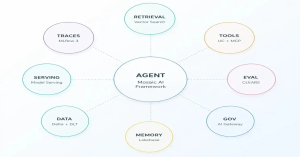
Production AI agents
Enterprise AI Agents
Machine Learning & MLOps
Lakehouse Design & Governance
Data Quality & Observability
Databricks Implementation & Migration
Data Integration & Pipeline Engineering
Enterprise AI Agents
Machine Learning & MLOps
Lakehouse Design & Governance
Data Quality & Observability
Databricks Implementation & Migration
Data Integration & Pipeline Engineering
Enterprise AI Agents
Machine Learning & MLOps
Lakehouse Design & Governance
Data Quality & Observability
Databricks Implementation & Migration
Data integration & pipeline engineering
Why Databricks?
Unified Lakehouse Architecture
Native AI/ML Capabilities
Advanced Governance with Unity Catalog
Real-Time Data Processing
Open Ecosystem and Scalability
From Consultation to Execution, We’ve Got You Covered
Discovery & Blueprint
We start with a rapid technical assessment of your existing architecture and goals to design a custom migration blueprint.
Accelerated Migration
Our certified engineers use proven accelerators to seamlessly migrate your data, pipelines, and workloads, ensuring a fast and secure transition.
Optimization & Governance
Post-migration, we immediately optimize your environment for peak performance and cost-efficiency while implementing robust data governance and security frameworks.
Enablement & Innovation
We empower your team with expert training and best practices, enabling them to immediately leverage the platform for advanced analytics and AI innovation.
Databricks Insights
How Databricks Data Governance Enhances Enterprise Security and Compliance
Getting Started with Databricks LakeFlow
Databricks vs Snowflake in the Age of AI
Your Handbook for Databricks Lakehouse Platform
Databricks RC Experts
Build Real-Time AI Agents with Databricks
Databricks FAQs
How do we implement Unity Catalog (UC) in Databricks?
- Set up the foundation: Unity Catalog is the single place to manage data and permissions across all Databricks workspaces. We first create a central metastore, connect workspaces to it, and sync user identities from Azure Entra ID.
- Organize and secure data: We then define catalogs, schemas, and tables to structure the data. Access controls, tags, and masking rules keep sensitive data protected. For performance, we enable Liquid Clustering and Predictive Optimization to automatically organize and speed up queries.
I have performance issues in Databricks SQL Warehouse — what configurations or optimizations help?
- Warehouse setup: We recommend using Serverless SQL Warehouses with Photon (Databricks’ high-speed engine). Turn on autoscaling and workload isolation so performance adjusts to demand.
- Query tuning: Write efficient SQL — filter early, avoid unnecessary columns, and join smaller tables smartly. Maintain fresh table stats and use Liquid Clustering to reduce data scanning. These steps keep queries fast and costs low.
How do we manage service principals (SPs) and access controls in Databricks?
- Access management: Service principals are “non-human” accounts used for automation. We create them in Azure Entra ID and connect them at the Databricks account level for secure, scalable identity management.
- Permissions and governance: We follow a “least access needed” approach — granting only what’s required for each user or service. Unity Catalog manages all permissions centrally, and data access can be isolated through secure connections and governed storage.
How do we deploy machine learning models in Databricks?
- Model management: We train models using MLflow and store them in Unity Catalog, which tracks versions, permissions, and lineage. This ensures consistent governance and easier collaboration.
- Model serving: Models can be deployed in real time using Mosaic AI Model Serving (a serverless, fully managed option) or in batches through Jobs and SQL. Security is handled with OAuth and, on Azure, can be locked down with Private Link for private network access.
Does Royal Cyber provide managed services for Databricks?
Can we migrate from Snowflake to Databricks?
Yes, migrating from Snowflake to Databricks is feasible. The process involves data extraction, schema mapping, ETL pipeline reconfiguration, and thorough testing. Royal Cyber offers comprehensive migration services ensuring minimal disruption, optimized performance, and seamless transition to Databricks’ unified analytics platform.
How much does Databricks implementation cost?
Databricks implementation costs vary based on project scope, data complexity, migration needs, and customization requirements. Royal Cyber offers tailored solutions with certified consultants to assess your specific needs and deliver cost-effective implementations aligned with your business goals.
Are there any tutorials or resources to learn about Databricks Lakehouse Federation?
Yes. Royal Cyber offers comprehensive Databricks consulting services including training workshops, proof-of-concept implementations, and custom tutorials. Contact us for more details