

Home > Blogs > Test Automation > Enterprise Microservices Architecture: A Complete Implementation Guide

Global Head
December 24, 2025

Software architecture has reached a crossroads where monolithic applications are making way for microservices architecture as a way to stay ahead of the game with demands of modern, scalable, and robust systems. Microservices is a design pattern that structures applications as sets of small, independent, and autonomous services by business domains, each being deployable separately and loosely coupled. It makes organizations more agile, scalable, and fault-tolerant as well as enables continuous deployment methods. As companies adopt more cloud-native technology and DevOps, having a grip on concepts, constraints, and deployment patterns of microservices is the way forward for building next-gen applications that can grow with evolving business demands, making the shift to Enterprise Microservices Architecture a strategic imperative.
Successfully adopting microservices hinges on robust and mature DevOps practices. Royal Cyber specializes in building and optimizing these core DevOps capabilities, providing services that automate deployment, ensure reliable release management, and establish Infrastructure as Code (IaC) for platforms like Kubernetes. Our expertise ensures the foundational operational framework is in place to support the agility and scale that microservices architecture promises.
Problem Statement/Objective
Current Challenges of Monolithic Architecture
- Scalability Limitations: Monolithic apps are highly stifled while scaling individual components independently, leading to resource wastage and performance bottlenecks
- Technology Lock-in: Single stack technology limitations limit innovation and flexibility towards upcoming technologies
- Deployment Risks: One point of failure in deployment can bring down whole applications
- Team Coordination: Large codebases create high levels of coordination among development teams, which slow down development cycles
- Maintenance Complexity: With the number of apps, updating and maintaining monolithic systems in one piece becomes difficult
Objectives of Microservices Implementation
- Enable Independent Scaling: Allow certain services to scale independently of demand without affecting other components
- Improve Fault Isolation: Make failures in one service impossible to affect other services
- Accelerate Development: Permit several teams to independently build several services
- Technology Diversity: Permit different technologies and frameworks for different services depending on requirements
- Continuous Deployment: Permit several frequent low-risk deployments of individual services
Planning and Implementation Phase
Phase 1: Strategy and Assessment Development
Objective:
- Conduct comprehensive application evaluation
- Define service boundaries by using Domain-Driven Design (DDD)
- Define service decomposition strategy
- Establish governance and standards framework
Key Activities:
- Business capability mapping
- Data flow analysis
- Dependency identification
- Technology stack evaluation
Phase 2: Service Decomposition Strategy
Monolithic Application Decomposition:

Phase 3: Base and Framework
Objective:
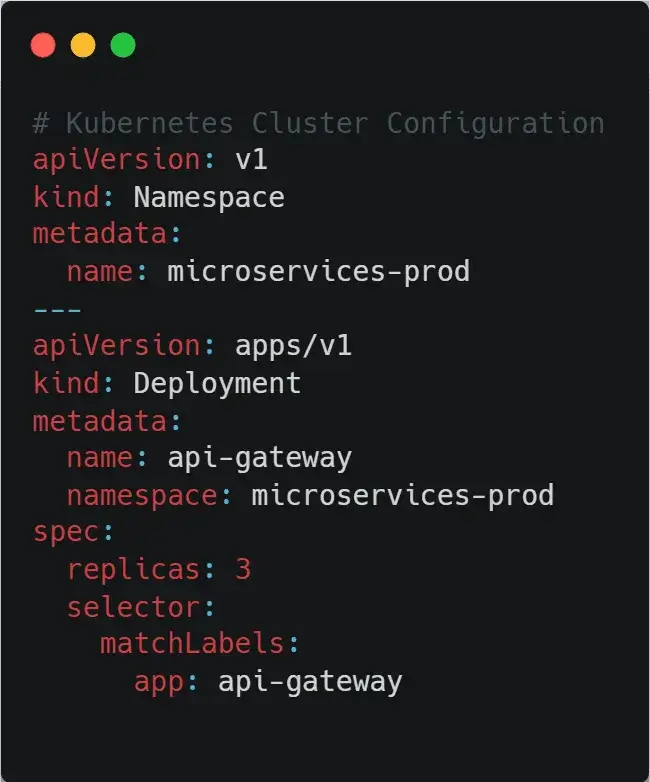
- Installation of container orchestration platform (Kubernetes/Docker Swarm)
- Service mesh deployment (Istio/Linkerd)
- CI/CD pipeline configuration
- Monitoring and observability tools deployment
Configuration Requirements:
Phase 4: Service Identification and Design
Objective:
- Service boundary definition
- API contract design
- Data management strategy
- Security model implementation
Phase 5: Pilot Implementation
Objective:
- Unpack 2-3 services from monolith
- Implement inter-service communication
- Establish monitoring and logging
- Performance test and optimize
Phase 6: Scaling and Gradual Migration
Objective:
- Strangler Fig pattern implementation
- Database decomposition
- Legacy system integration
- Full-scale deployment
Development and Configurations Steps
Step 1: Implementation of Service Discovery
Implementation Approach:

Key Components:
- Service Registry: Central repository for service instances
- Health Checks: Automated checking of service health
- Load Balancing: Distribute load among service instances
Step 2: API Gateway Implementation

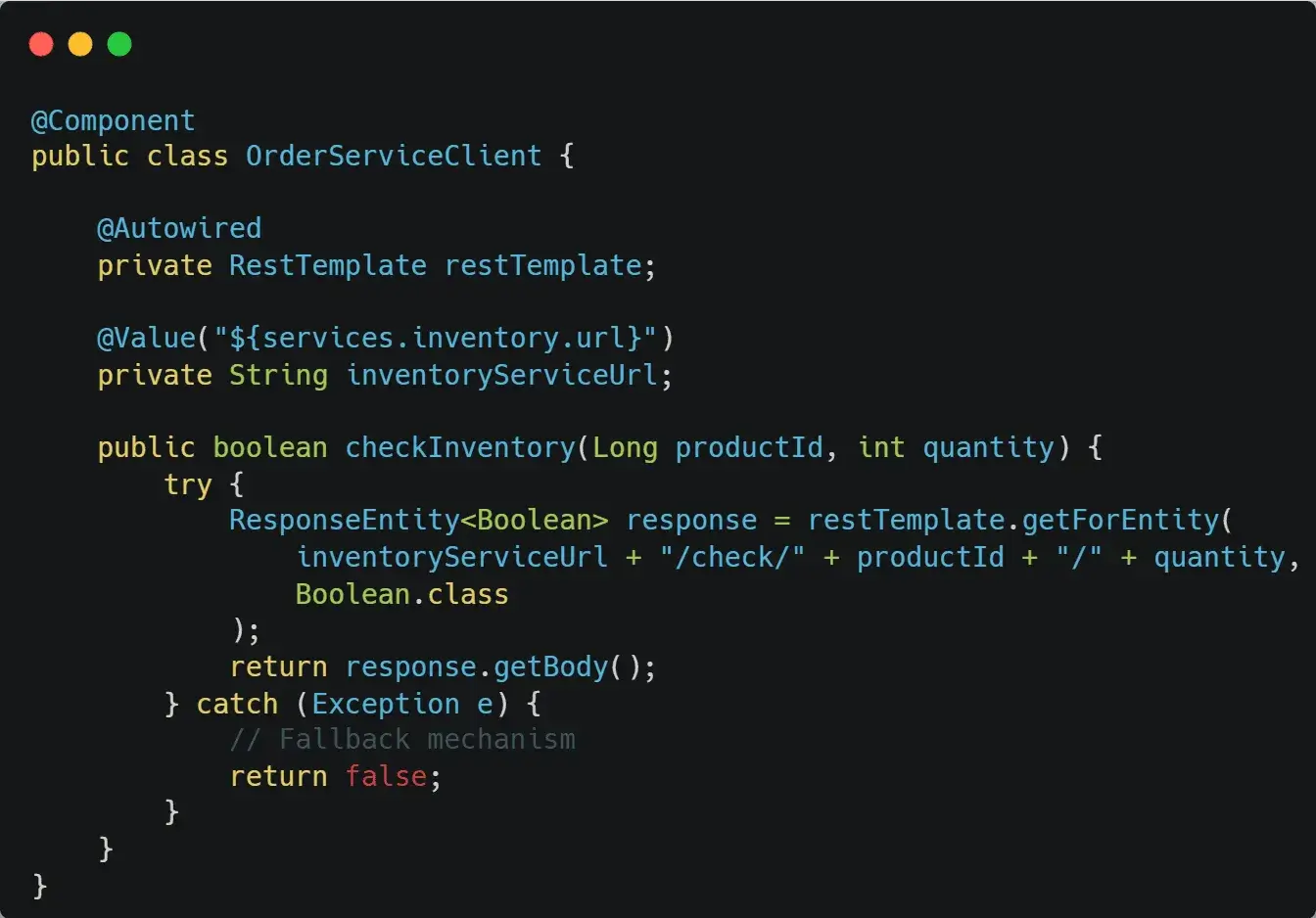
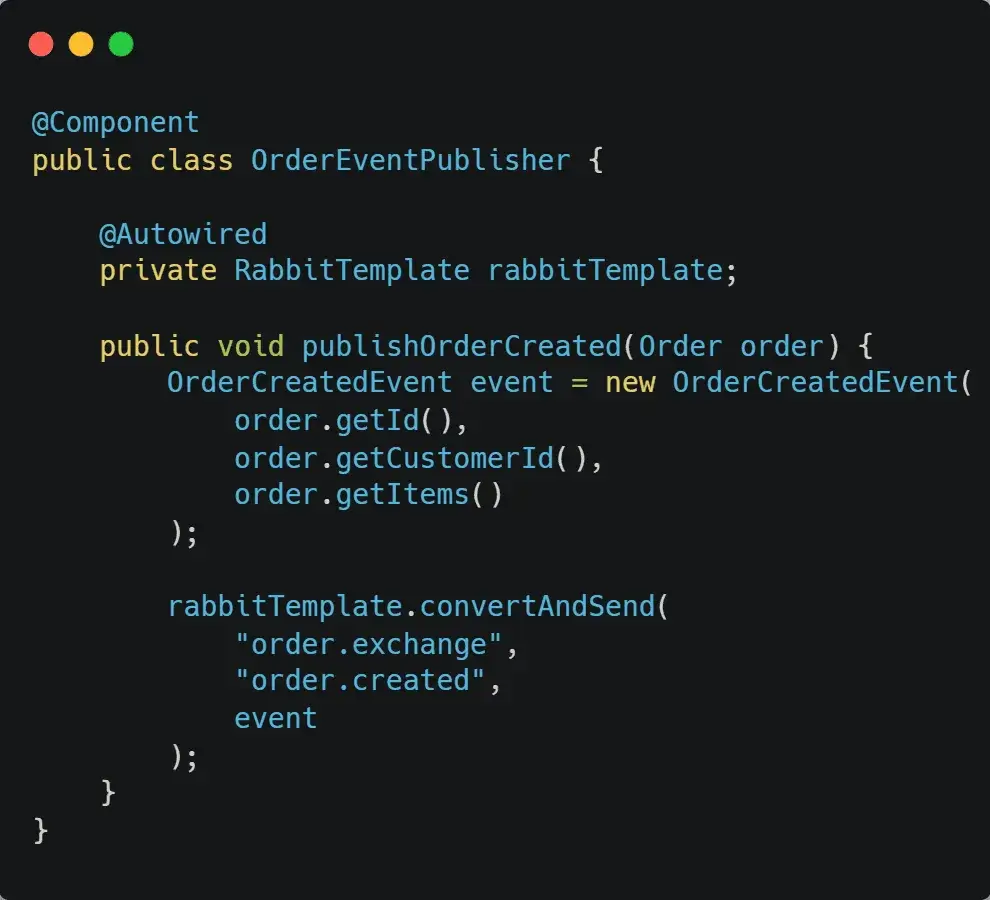
Step 3: Inter-Service Communication
Synchronous Communication (REST):
Asynchronous Communication (Message Queue):
Step 4: Data Management and Persistence
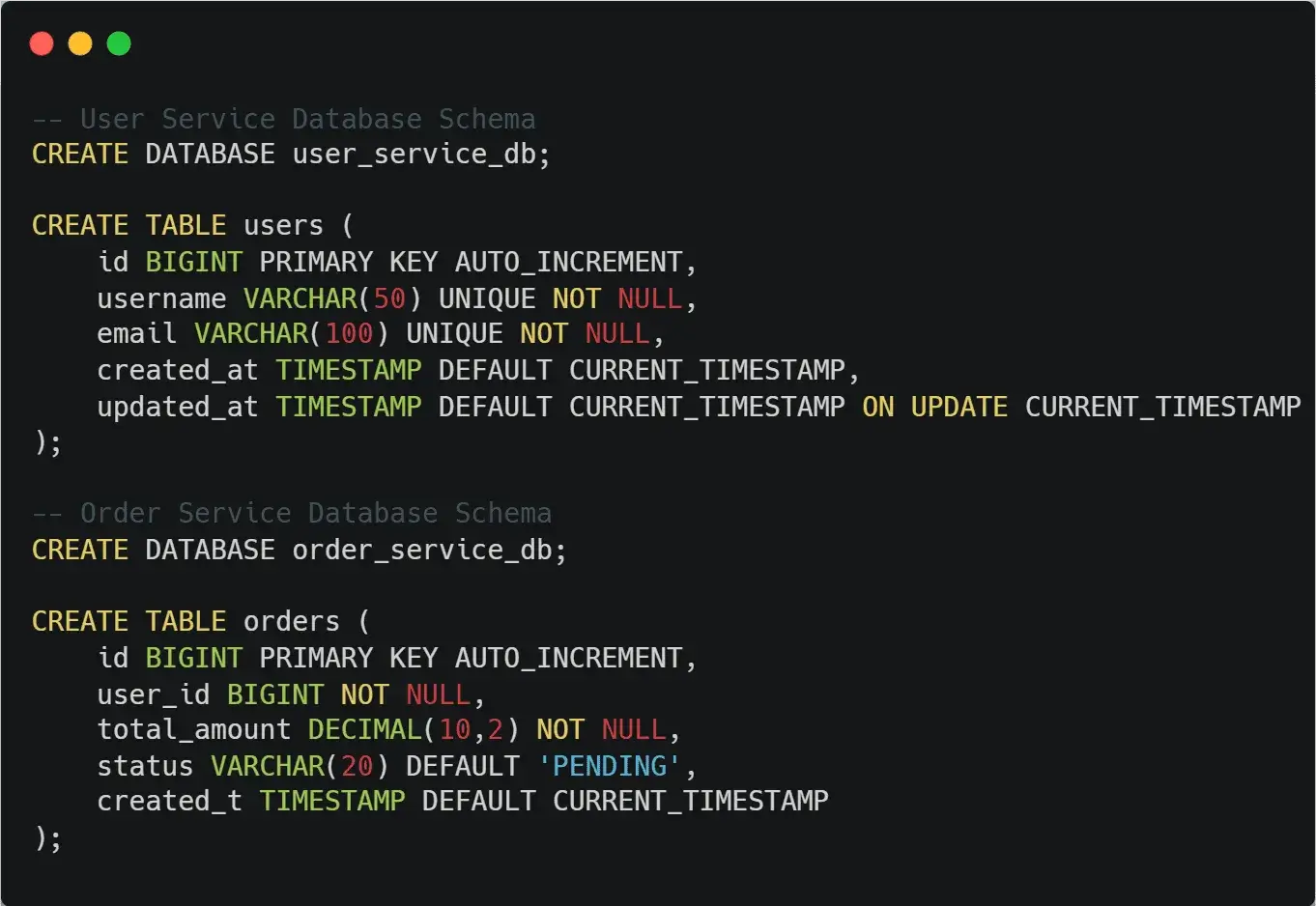
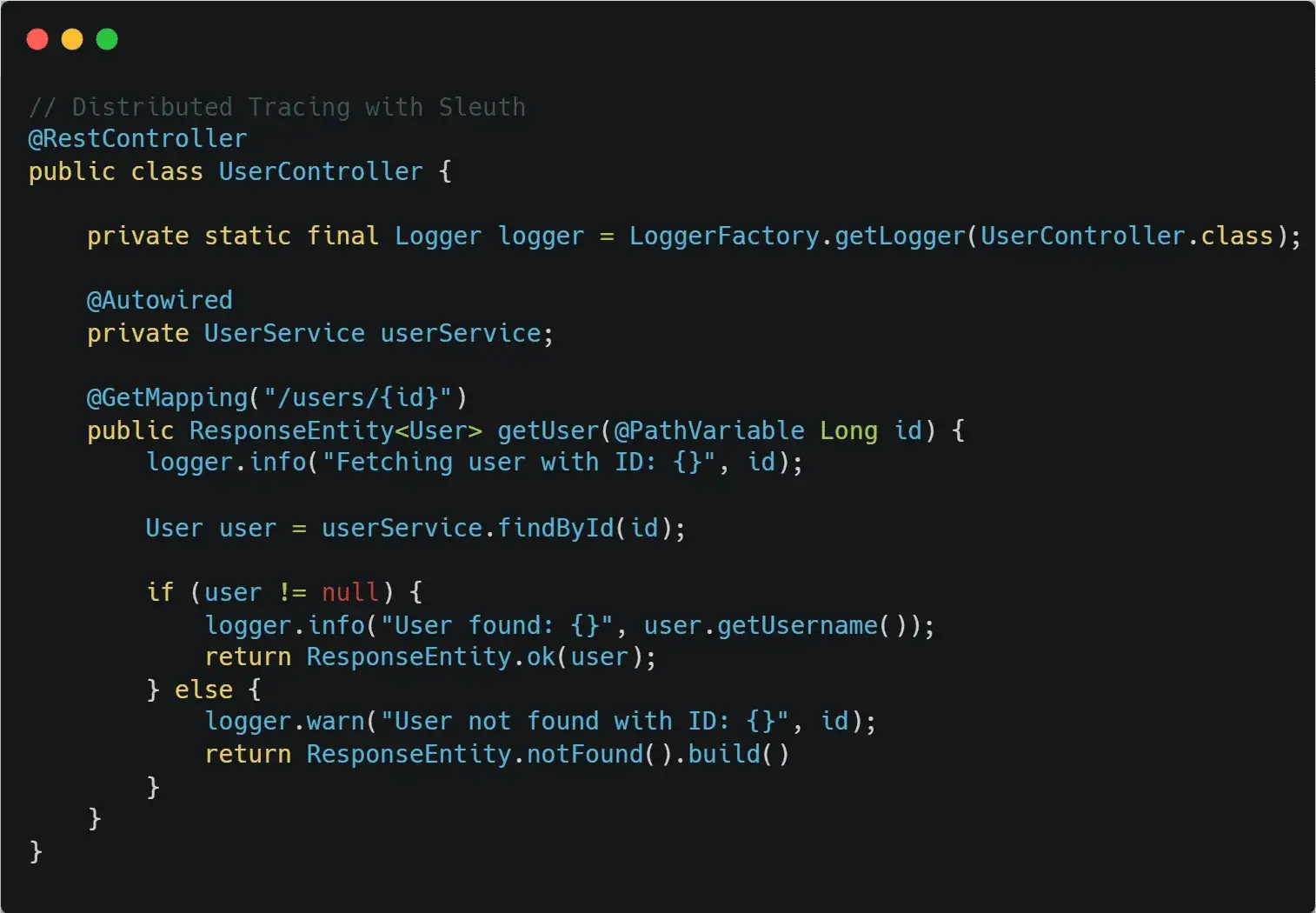
Step 5: Oversight and Openness
High-Level Solution Design and Architecture
General Architecture Overview
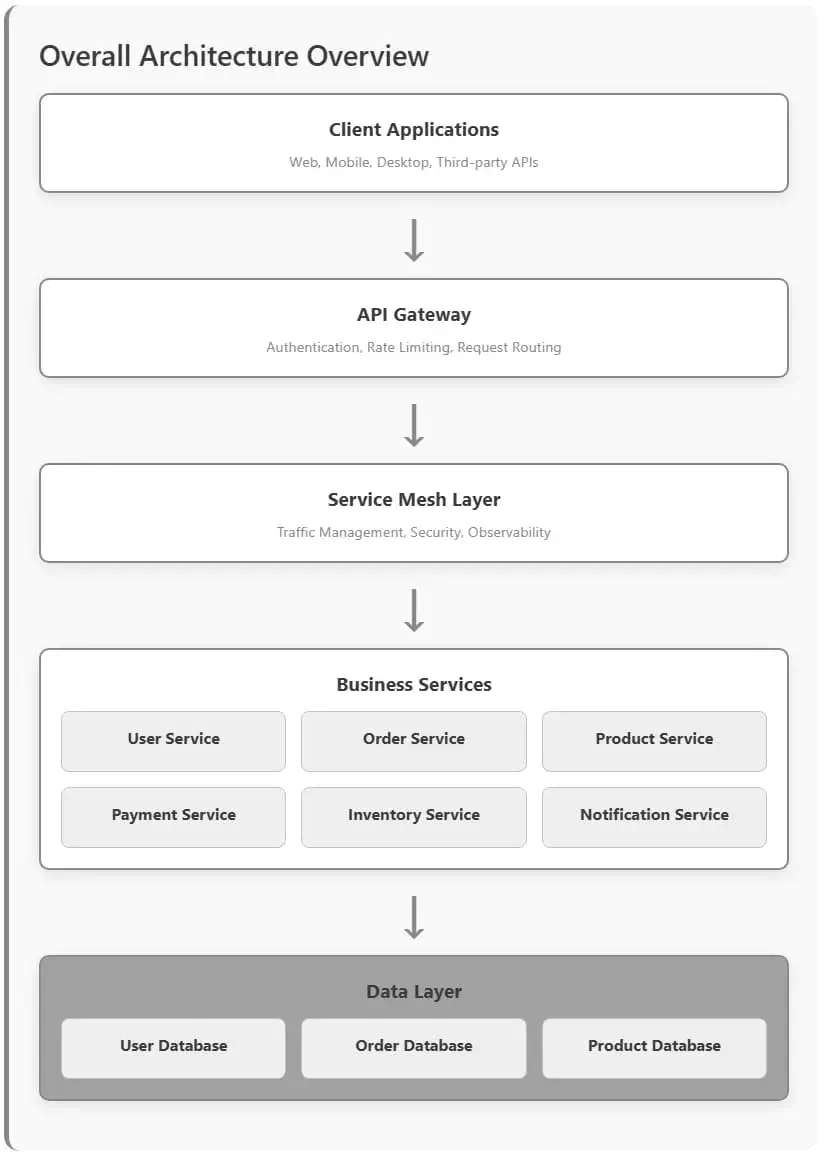
Primary Architectural Components
API Gateway Layer:
- Single entry point for all client requests
- Manages overarching issues (authentication, logging, rate limiting)
- Request routing and protocol translation
- Response aggregation and transformation
Service Mesh:
- Service-to-service communication management
- Load balancing and circuit breaking
- Security policies and mTLS
- Observability and metrics collection
Business Services:
- Domain-specific microservices
- Independent deployment and scaling
- Business logic encapsulation
- Data ownership and management
Infrastructure Services:
- Service discovery and configuration
- Monitoring and logging
- Message queuing and event streaming
- Container orchestration
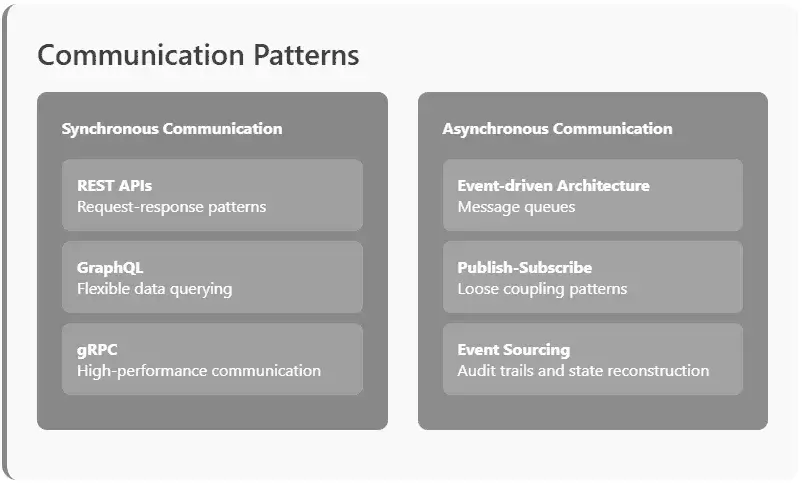
Communication Patterns
Synchronous Communication:
- REST APIs for request-response patterns
- GraphQL for flexible data querying
- gRPC for high-performance communication
Asynchronous Communication:
- Architecture driven by events utilizing message queues
- Publish-subscribe models for flexible connections
- Event sourcing for audit trails and state reconstruction
Data Management Strategy
Database per Service:
- Each microservice owns its data
- Prevents tight coupling through shared databases
- Enables independent scaling and technology choices
Pattern 2: Liberty-Based Modernization:
- Lightweight container deployment
- Reduced licensing costs
- Enhanced cloud-native capabilities
- Optimal for new development and selective migration
Data Consistency Patterns:
- Eventual consistency for distributed transactions
- Saga pattern for long-running transactions
- CQRS for read/write separation
Challenges and Resolutions
Service Discovery and Communication Complexity
Data Integrity and Transaction Control
Monitoring and Debugging Distributed Systems
Security and Authentication Across Services
Network Latency and Performance Optimization
Key Takeaways from Implementation
Domain-Driven Design is Critical for Success
Infrastructure Automation and DevOps Practices are a Must
Observability Needs to Be Designed In from the Beginning
Organizational and cultural changes are as important as technical
Start with fundamental concepts and advance through increasing intricacy.
Impact: This approach allows teams to learn from early implementations, create patterns and best practices, and organizational capacity gradually. It also reduces the potential for catastrophic failures and allows course corrections based on real experience.
Conclusion
A movement towards a microservices style of architecture is a significant paradigm shift that yields huge benefits in terms of organizational responsiveness, scalability, and maintainability but presents new issues that have to be dealt with carefully. Successful adoption has to be an end-to-end one which addresses not only the technology considerations of service decomposition and inter-service communication but also the cultural and organizational transformation needed to accommodate a distributed mode of development. Success starts with getting off on the right foot in terms of areas of business, building good infrastructure automation, and architecting end-to-end observability into the system from the start.
The journey of players like Netflix demonstrates that while the journey to microservices is challenging, the benefits of increased scalability, fault tolerance, and development velocity make the exercise worthwhile for organizations at scale. Royal Cyber ensures that the technical promise of microservices is matched by operational excellence. Our core DevOps services are crucial for this transition, as we provide the necessary automation and tooling—from continuous testing and security integration (DevSecOps) to centralized logging and monitoring—that allows enterprises to manage hundreds of services reliably and efficiently. Partnering with Royal Cyber helps accelerate your time-to-market and maximize the return on your architectural investment, making us the Best Microservices Architecture company in USA for your modernization journey.
Author
Zeeshan Mukhtar
Websites used to be something you built once and basically…
Read More »
Websites used to be something you built once and basically…
Read More »
Websites used to be something you built once and basically…
Read More »