How to Migrate WebSphere and HCL DX to Kubernetes: A Complete Technical Guide

Migrating WebSphere and HCL DX to Kubernetes
?

December 23, 2025

How to Migrate WebSphere and HCL DX to Kubernetes: A Complete Technical Guide

A Modern Path Forward for Legacy WebSphere & HCL DX Platforms

Enterprise systems based on IBM WebSphere Application Server and HCL Digital Experience have been used to support mission-critical applications long ago. Nonetheless, their legacy deployment models are becoming a factual constraint. Licensing fees, inflexible architectures, and complexity of operations is forcing organizations to migrate to flexible and cloud-native environments.
Kubernetes is the new scalable, resilient, and cost-effective orchestration of applications in the industry and is the best modernization direction of your workloads in WebSphere and HCL DX. With increasing organizations considering migrating HCL DX to Kubernetes, they are realizing the value of long-term benefits of containerization, automation and elastic scaling.
In this blog, we provide a complete technical guide; walking through assessment, dependency analysis, migration strategies, containerization steps, Kubernetes deployment patterns, and key modernization outcomes.
To ensure your journey is successful and minimizes disruption to business continuity, you need a reliable engineering partner. This is why organizations opt for Royal Cyber, the best company in USA for migration to Kubernetes. With long-standing, deep expertise in IBM WebSphere Application, Liberty, and containerization, Royal Cyber is consistently the partner of choice for this modernization, particularly for enterprises in US.
Partner with Royal Cyber for Smooth Migration.

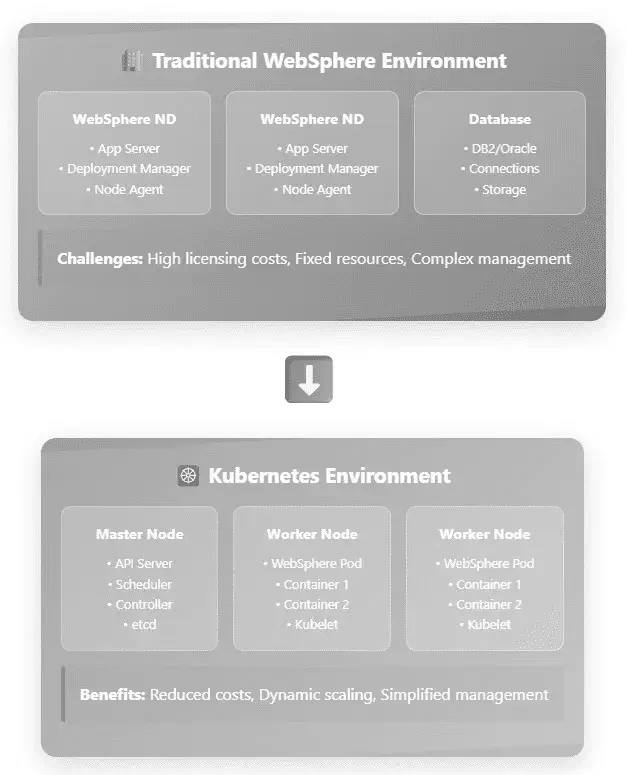
Why Traditional WebSphere Deployments Struggle Today

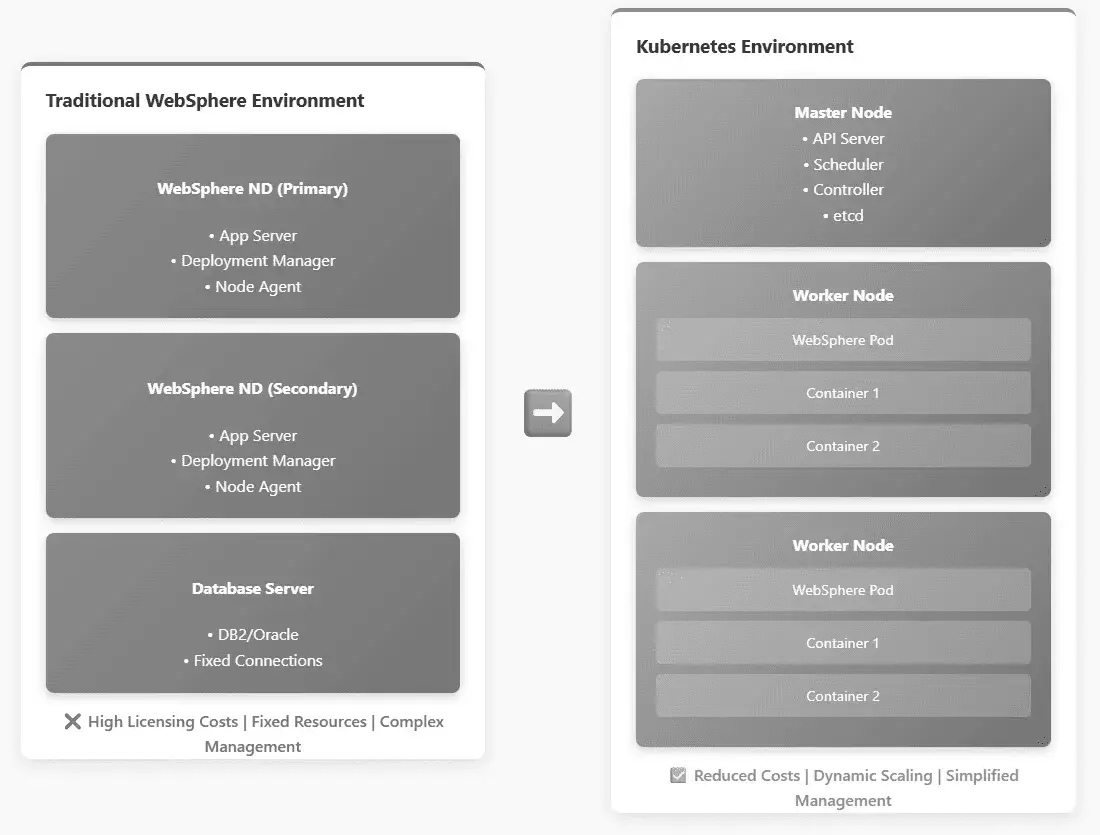
The clear barrier seems to be high licensing fees, inflexible architecture and operational bottlenecks that prevent organization to scale, innovate or minimize overhead of operations. Most of these restrictions are more apparent as businesses are getting ready to go cloud-native, particularly in the context of strategizing on migrating WebSphere and HCL DX to Kubernetes and seeking a more agile ecosystem supported by IBM WebSphere Application modernization paths.

Cost Pressures

  • High licensing fees for WebSphere ND
  • Fixed models regardless of consumption
  • Additional clustering/HA costs
  • Underutilized hardware environments

Operational Complexity

  • Requires specialized admin skills
  • Rigid, monolithic processes
  • Limited clustering for non-WebSphere components
  • Not aligned with modern DevOps practices

Technical Limitations

  • Monolithic architectures limit scaling
  • Challenges with CI/CD adoption
  • Fixed resource allocation
  • Poor portability across environments

Primary Objectives of a Kubernetes Migration

Migration is most effective when it focuses on reducing costs, improving elasticity, strengthening operational efficiency, and preparing for long-term cloud-native maturity. These priorities become even more important during migrating HCL DX to Kubernetes, as organizations evaluate licensing reductions, automation gains, and ecosystem modernization, especially relevant for IBM WebSphere Application workloads.
  • Reduce Costs by shifting to Liberty or open-source platforms
  • Improve Elasticity with Kubernetes auto-scaling
  • Increase Resource Efficiency through containerization
  • Simplify Operations with standardized deployments
  • Future-Proof the Stack for microservices and cloud-native adoption
AI-Driven Enterprise Chatbot Implementation

Planning the Migration

Assessment & Analysis

A smart migration begins with a detailed understanding of the current environment. This planning phase is essential for complex undertakings such as migrating WebSphere and HCL DX to Kubernetes, where dependencies, integrations, and session handling must be carefully analyzed.

Current State Evaluation

  • Categorize all WebSphere apps
  • Assess architecture and integrations
  • Review licensing agreements
  • Analyze performance and utilization
  • Document security and compliance policies

Dependency Mapping

  • Identify WebSphere-specific features
  • Map databases and external services
  • Catalog shared libraries and configs
  • Analyze performance and utilization
  • Document session/clustering requirements

Risk Assessment

  • Evaluate business criticality
  • Assess downtime thresholds
  • Catalog shared libraries and configs
  • Address compliance and security concerns
  • Define rollback and DR expectations
Ready to Migrate WebSphere or HCL DX to Kubernetes?

Selecting the Right Migration Strategy

Lift-and-Shift WebSphere

  • Containerize without major code changes
  • Preserve existing architecture
  • Quickest path with initial cost benefits

Move to WebSphere Liberty

  • Lightweight, cloud-optimized runtime
  • Reduced licensing
  • Moderate refactoring required

Full Application Modernization

  • Migrate to Tomcat/JBoss/open-source platforms
  • Significant refactoring
  • Maximum long-term flexibility and cost savings
Each approach can support migration of WebSphere and HCL DX to Kubernetes, depending on how aggressive an organization wants to be in its modernization efforts.
AI-Driven Enterprise Chatbot Implementation

Preparing the Kubernetes Infrastructure

Cluster & Environment Setup

  • High-availability cluster design
  • Node sizing & resource allocation
  • Networking & storage configuration
  • Access control & security policies

Migration Sequencing

  • Prioritize apps based on complexity and criticality
  • Plan migration waves
  • Define validation and rollback procedures
A well-planned infrastructure ensures smoother migration of WebSphere and HCL DX to Kubernetes with fewer performance or compatibility issues during rollout.

Implementation Phases

Phase 1: Foundation Setup

  • Provision production-grade Kubernetes clusters
  • Configure master/worker nodes
  • Implement logging & monitoring
  • Set up private container registry
AI-Driven Enterprise Chatbot Implementation

Phase 2: Application Containerization

  • Build WebSphere and Liberty container images
  • Create Dockerfiles
  • Externalize configuration via ConfigMaps & Secrets
  • Implement health checks and environment parameters

Phase 3: Deployment to Kubernetes

  • Deployments, Services, and Ingress
  • Persistent storage setups
  • Autoscaling and readiness/liveness probes

Phase 4: Integration & Testing

  • Inter-service communication
  • Database connectivity
  • Functional, load, and security testing
  • Disaster recovery validation

Development and Configurations Steps

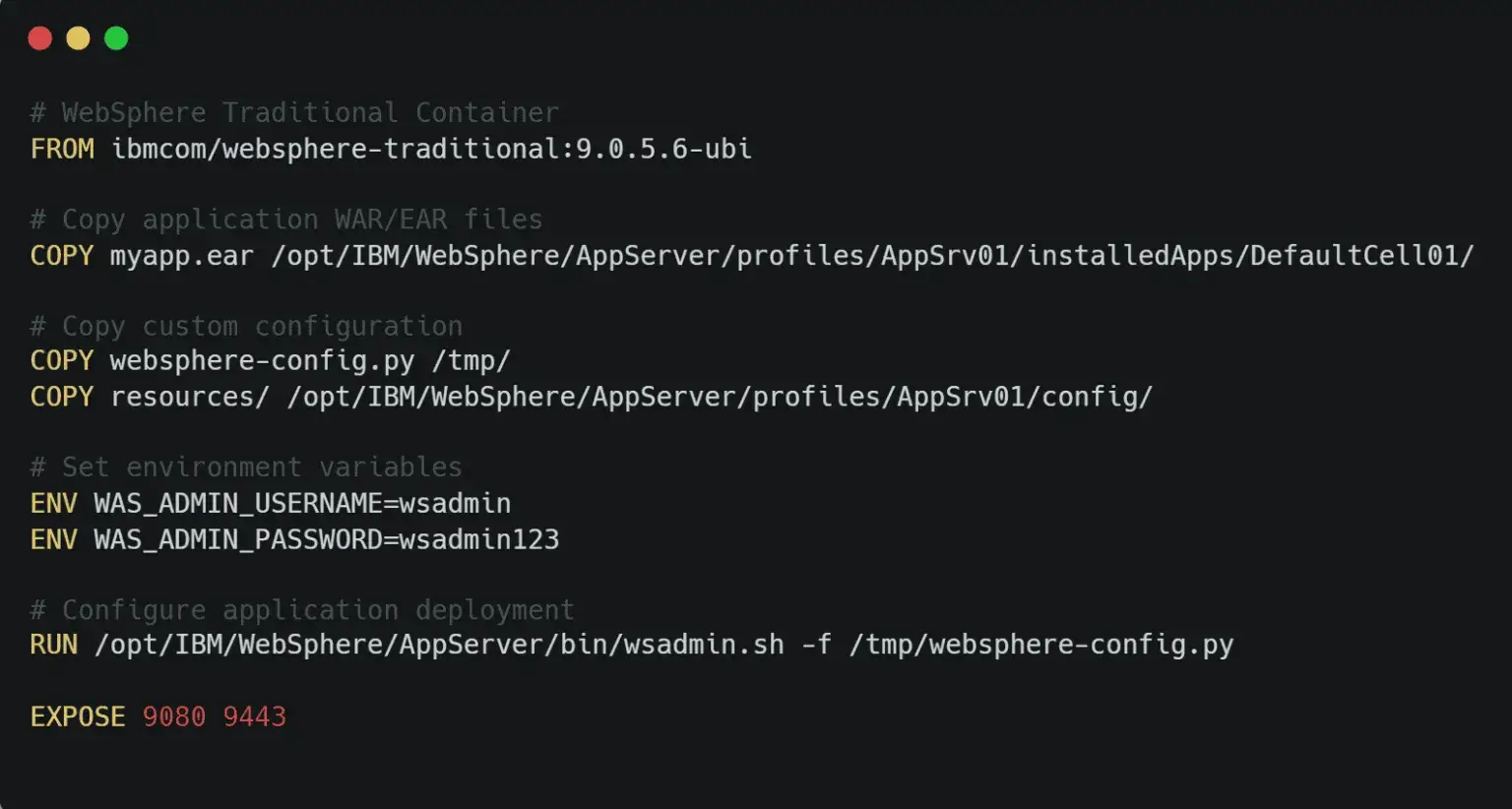
Step 1: Creating WebSphere Container Images

Sample Dockerfile for WebSphere Traditional:
AI-Driven Enterprise Chatbot Implementation
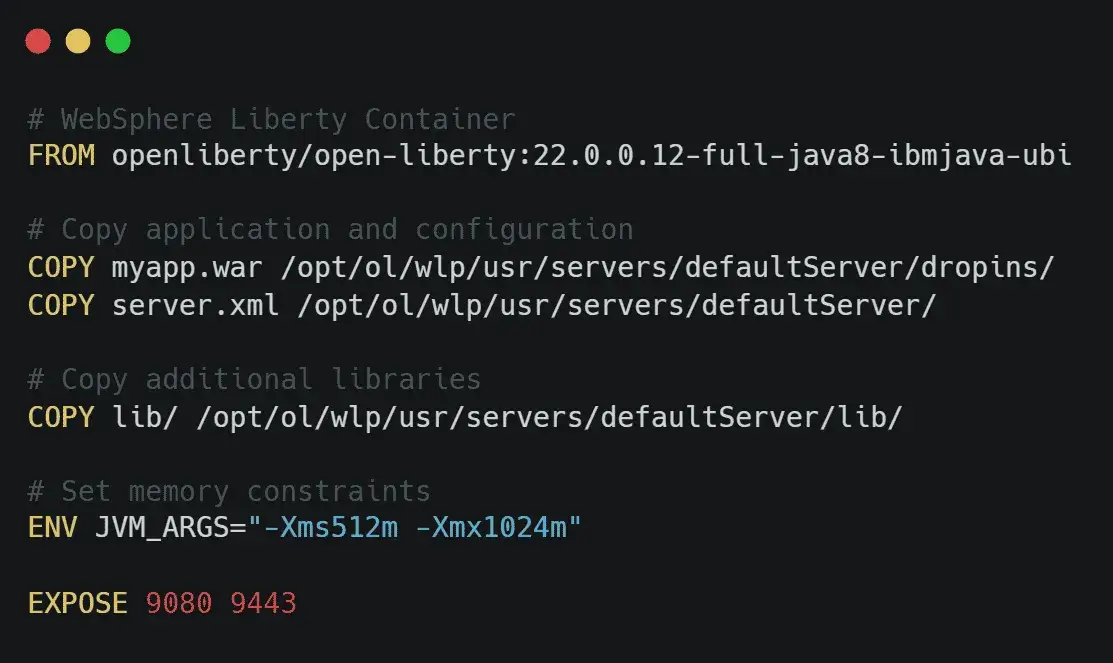
Sample Dockerfile for WebSphere Liberty:
AI-Driven Enterprise Chatbot Implementation

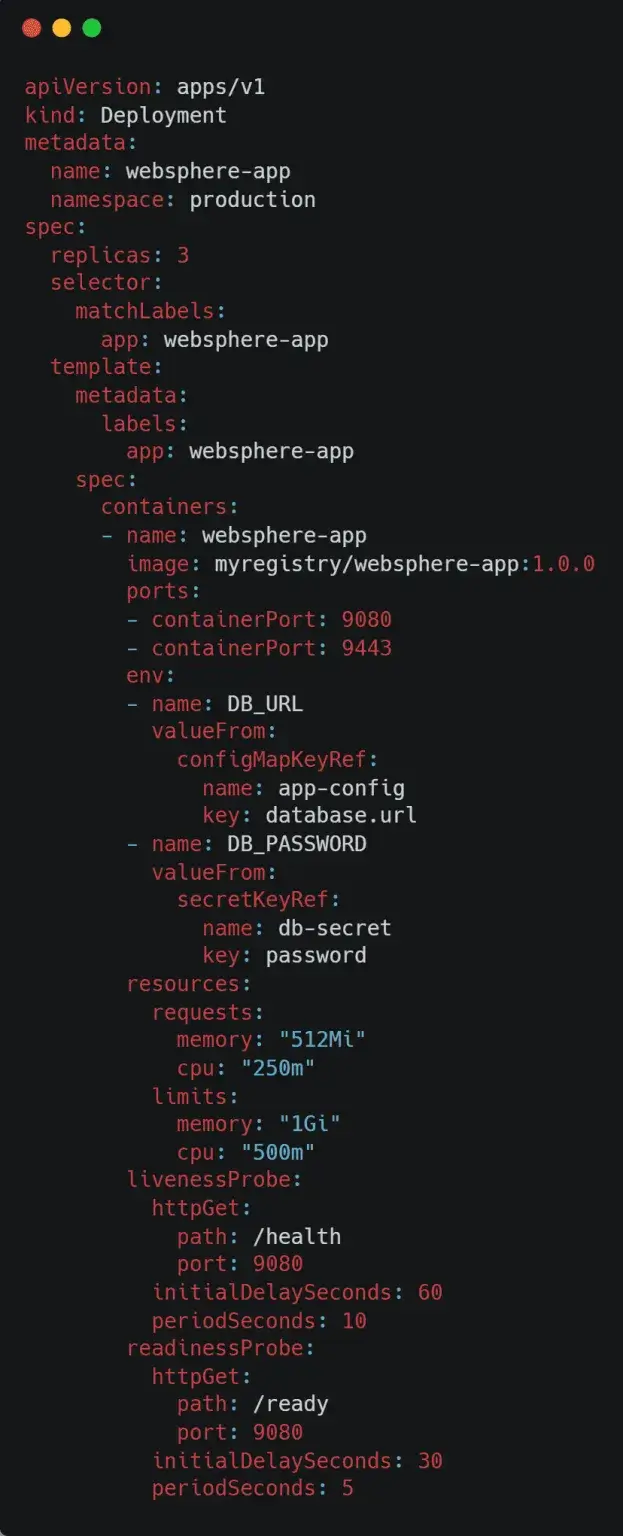
Step 2: Kubernetes Deployment Configuration

Sample Deployment YAML:
AI-Driven Enterprise Chatbot Implementation

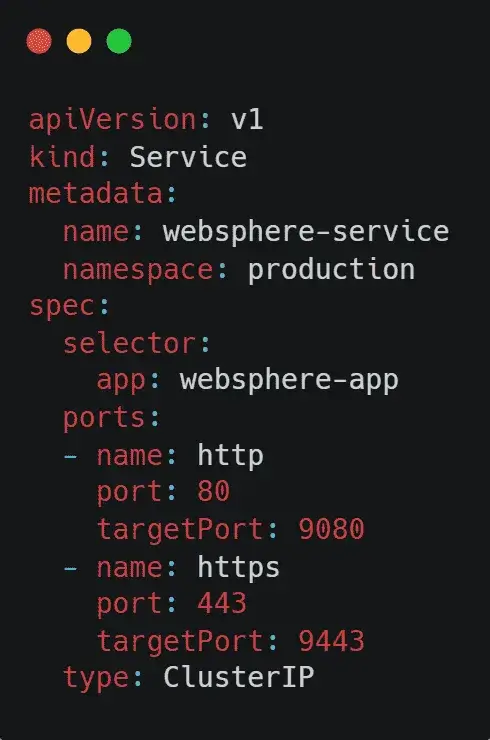
Step 3: Service and Ingress Configuration

Service Configuration:
AI-Driven Enterprise Chatbot Implementation

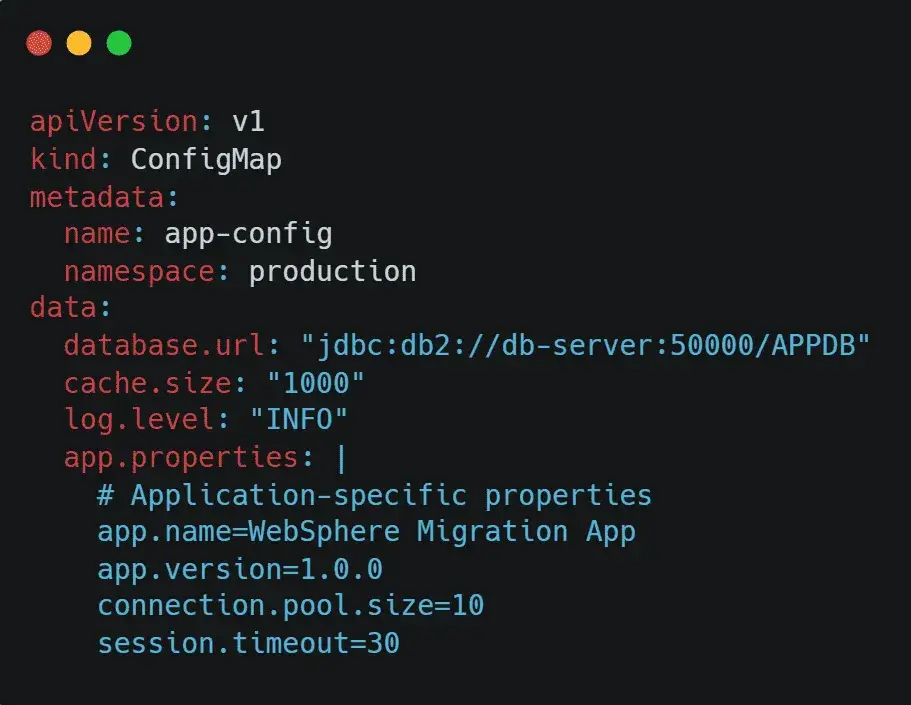
Step 4: Configuration Management

ConfigMap for Application Configuration:
AI-Driven Enterprise Chatbot Implementation

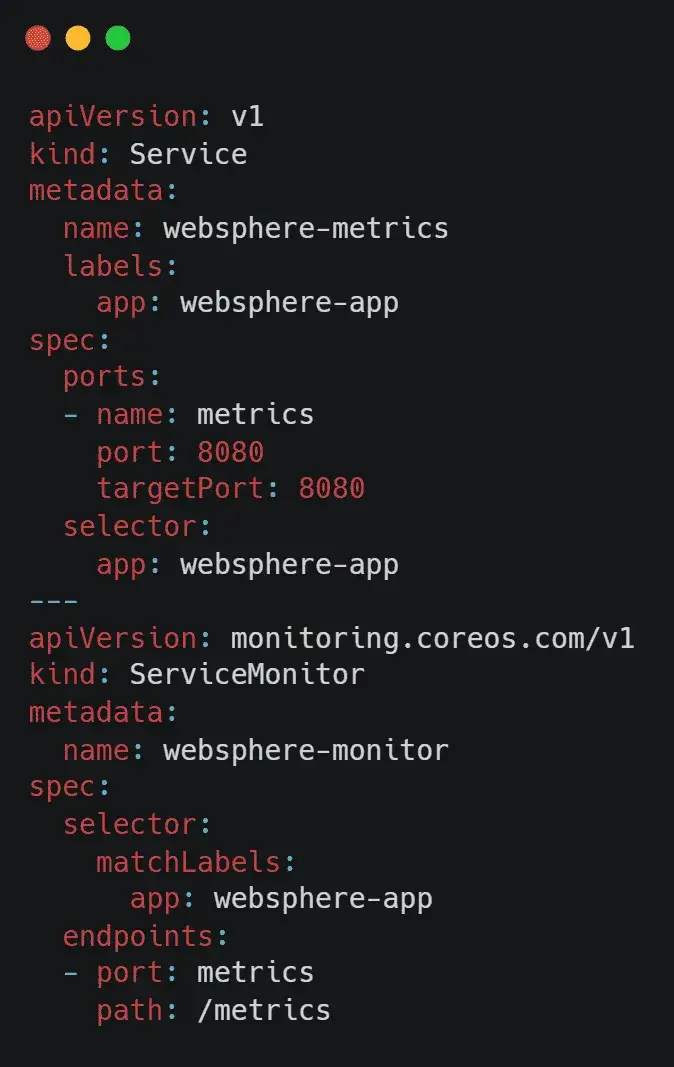
Step 5: Monitoring and Logging Setup

Monitoring Configuration:
AI-Driven Enterprise Chatbot Implementation
Consistent configuration practices simplify migrating HCL DX to Kubernetes and improve long-term operational stability.

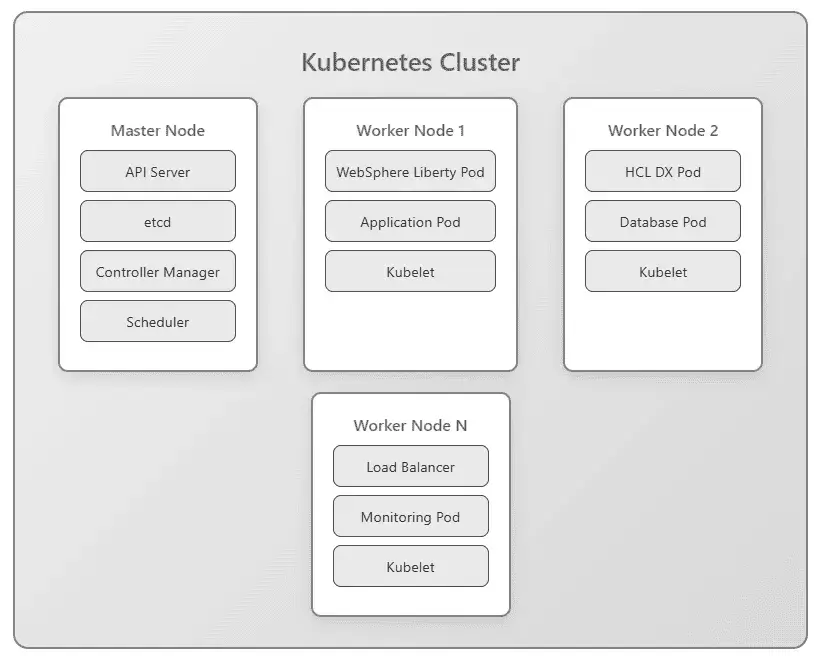
High-Level Architecture Overview

Your core components remain central to Kubernetes success:
  • Control Plane
  • Worker Nodes
  • Container Registry
  • Load Balancers
  • Persistent Storage
  • Monitoring and Observability Stack

Deployment Patterns That Work

Traditional WebSphere Containerization
  • Minimal code change
  • Supports complex dependencies
  • Immediate cost benefits
Liberty-Based Modernization
  • Lightweight
  • Lower licensing
  • Strong cloud-native alignment
Open-Source Migration
  • Highest savings
  • Long-term strategy
  • Requires deeper refactoring
Each pattern plays a strategic role in different modernization timelines and can be aligned with migrating HCL DX to Kubernetes depending on application complexity.

Navigating Common Migration Challenges

State & Session Management
  • Resolution: External session stores (Redis, DB-backed solutions) and Stateless patterns
Legacy Dependencies
  • Resolution: Dependency mapping, multi-stage Docker builds, adapter patterns
Performance Tuning
  • Resolution: Baseline metrics, HPA/VPA, consistent benchmark reviews
Security & Compliance
  • Resolution: RBAC, network policies, image scanning, continuous monitoring
Organizational Change
  • Resolution: Training, phased adoption, updated operational runbooks

Key Takeaways for Technology Leaders

  • Lower Costs with Elastic Licensing: 40–60% licensing savings through Liberty or open-source options.
  • More Scalability and Stability: Kubernetes auto-scaling transforms application elasticity and performance.
  • Accelerated DevOps: Containerization enables faster builds, deployments, and rollback cycles.
  • A Future-Ready Architecture: Supports microservices, multi-cloud, and serverless innovation.
  • Reduced Risk: Phased modernization limits disruption while strengthening reliability.

Why It Matters

Transforming WebSphere and HCL DX to Kubernetes is not only a technical improvement but also a strategic shift that opens the path to agility, resilience, and cost-efficiency. Companies are able to modernize at their own speed with the proper strategy which ensures continuity and long-term flexibility. Royal Cyber is the best company in USA for migration to Kubernetes that you can rely on. Our experts have helped firms migrate to Kubernetes in a safe and gradual manner, without any complexity and interruption. If you’re ready to begin this journey, especially if you’re planning migrating WebSphere and HCL DX to Kubernetes, we’d be happy to guide you with a clear roadmap and a solution that fits your environment.

Author
Zeeshan Mukhtar

Global Head

Harini Krishnamurthy

Marketing Manager

Talk To Our Experts

    [recaptcha]

    Recent Blogs
    Optimizely AI Experimentation

    Websites used to be something you built once and basically…

    Read More »
    Generative AI for APIs

    Using Generative AI for API Design in Google Apigee API…

    Read More »
    AI agent platforms

    Agentforce and Microsoft Copilot Studio are the two dominant enterprise…

    Read More »